
THYRFING – Liberi dalle catene!

Uno dei grandi nomi della scena Viking/pagan metal svedese, i Thyrfing, ritorna dopo una lunga attesa, con l’eccellente ‘Vanagandr‘ per la Despotz Records, che diventa immediatamente uno dei migliori album della band. Il full-length è completo di tutte le caratteristiche peculiari dei Thyrfing, ognuna al suo meglio: tastiere e violini poetici, tempeste di blast beat, cupe marce epiche sorrette dai riff di chitarra, e la performance incredibilmente espressiva del vocalist. Con un così grande ritorno, non potevano bastare anteprima e recensione, eravamo curiosi di sapere qualcosa di più direttamente dalla band, così abbiamo raggiunto i Thyrfing per un’intervista ed ecco cosa è venuto fuori.
(Please scroll down for the ENGLISH version of the interview)
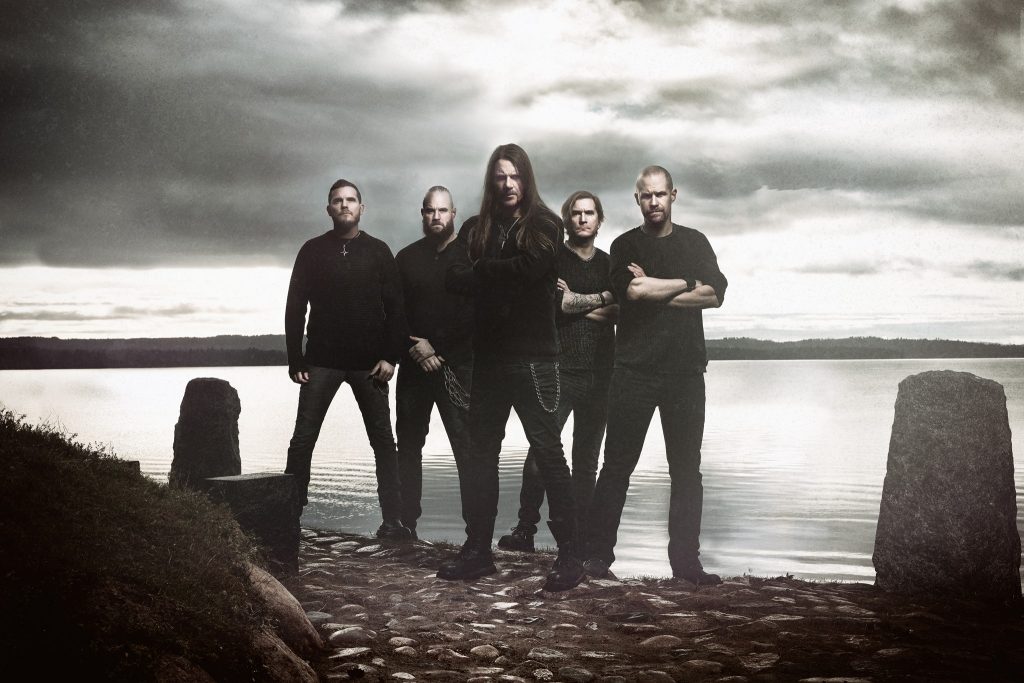
È un grande piacere avere i Thyrfing su Loud and Proud! Benvenuti! Prima di tutto, finalmente siete tornati con un altro full-length dopo 8 anni, come mai il vostro nuovo lavoro ci ha messo così tanto a vedere la luce?
“(Patrick Lindgren) Grazie! Sì, 8 anni… davvero molto tempo. Ci sono molte ragioni diverse, credo, ma alla fine i Thyrfing non sono mai stati una band che è stata costretta a prendere decisioni da una prospettiva commerciale o di business. Il che significa che nessuno (sia all’interno che all’esterno della band) ci ha mai detto che dobbiamo fare qualcosa ad un certo punto. Non sto dicendo che questa sia solo una buona cosa, e sì… a volte abbiamo avuto bisogno di qualcuno che facesse esattamente questo. Tuttavia, questa volta ci è voluto più tempo che mai, e credo che sia stata principalmente una combinazione di mancanza di tempo da dedicare alla band, a causa di altri impegni nella vita, insieme forse a una “pausa creativa” di cui avevamo bisogno. Durante tutti questi anni la band è stata comunque attiva, suonando dal vivo, ma anche scrivendo materiale, anche se ad un ritmo molto lento, ovviamente.”
Comunque, ‘Vanagandr’ è valso tutta questa attesa, secondo me questo è uno dei lavori più ispirati dei Thyrfing, e forse il più completo: contiene non solo gli elementi folk, ma anche quelli sinfonici, il suono epico legato al metal classico e anche le atmosfere dark esplorate soprattutto nei vostri album successivi al 2000. Tutto è così ben realizzato, l’intero album è sia vibratamente potente che poetico. Ho anche notato e apprezzato i ritornelli ‘catchy’ in ‘Rötter’ e ‘Fredlös’. Quali sono le vostre impressioni riguardo alla vostra ultima fatica?
“Grazie ancora, mi fa piacere sentirlo. E in realtà, penso che tu abbia già riassunto tutto molto bene nella tua domanda … e questo è più o meno esattamente come mi sento io. È sempre difficile paragonare il tuo lavoro recente alla storia della band e agli album precedenti, ma la mia sensazione è anche che questa volta ci siamo portati ad un altro livello, praticamente su tutto. Come dici tu, riassume anche la band e i diversi elementi che abbiamo esplorato nel corso degli anni, semplicemente portando tutto ad un livello superiore… come una versione migliore di noi stessi.”
Penso sinceramente che un altro punto di forza di ‘Vanagandr’ è che non c’è una canzone più debole, ognuna è notevole per varie ragioni. Di quale canzone (o canzoni) siete più orgogliosi?
“Sono d’accordo anche su questo. Forse, sotto-sotto eravamo un po’ titubanti, entrando in studio con solo otto canzoni. Di solito c’è almeno una canzone che non è davvero di alto livello e risulta un po’ deludente nella produzione. Allora potrebbe essere un bene tagliare una o due canzoni per migliorare l’album nel suo complesso. Comunque, abbiamo fatto dei demo/pre-produzioni abbastanza dettagliati quindi ero fiducioso su tutte le canzoni, e sì… penso che tutte siano venute bene per varie ragioni, come dici tu. Se dovessi scegliere un brano sarebbe probabilmente “Undergångens Länkar”. Penso che si sia rivelata fantastica sotto tutti i punti di vista e in un certo senso ha “tutto” dal punto di vista dei Thyrfing.”
Potete indicare una canzone che ritenete particolarmente rilevante per quanto riguarda i testi?
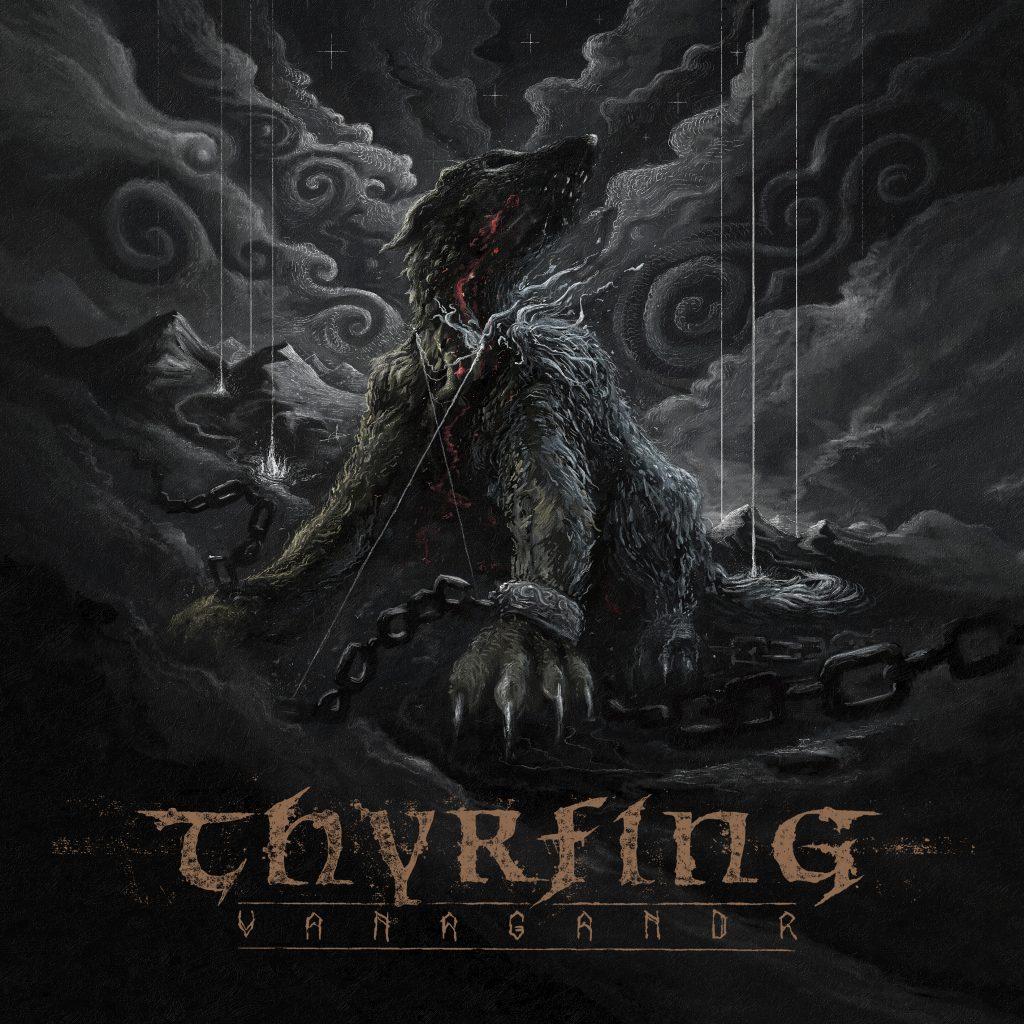
“Probabilmente sarebbe proprio “Undergångens Länkar”. Il testo è basato sul mito della creatura-lupo Fenrir che viene incatenata e intrappolata fino alla fine dei tempi e alla battaglia finale. Ciò è usato come metafora della lotta umana intorno alla creatività, al sentirsi “intrappolati” e alla vita in generale.”
‘Döp Dem I Eld’, ‘Järnhand’ e ‘Träldomsord’ sono tra le canzoni più violente e veloci di tutta la vostra discografia: è un segno di un parziale cambiamento, o ampliamento, del vostro sound, nei vostri ultimi album principalmente incentrati su tempi più lenti?
“Sì, abbiamo accelerato un po’ il tempo su qualche canzone, in realtà di proposito. Sentivamo che gli ultimi album forse erano un po’ troppo nello stesso ritmo, e che le canzoni più veloci avevano bisogno di essere… un po’ più veloci. Penso che aumenti la dinamica e lo renda un po’ più interessante, proposto insieme alle canzoni che sono più basate su parti più lente e pesanti.”
Potete dirci qualcosa sul processo creativo dietro la fantastica copertina di Niklas Sundin (ex-Dark Tranquillity)?
“Sì, sapevamo che eravamo pronti per una bella sfida con la creatura-lupo (“Vanagandr”, Fenrir) e per avere qualcosa connesso a questo sulla copertina… non è che siamo i primi a farlo, assolutamente… è stato bello riconnettersi con Niklas di nuovo, e abbiamo avuto un buon dialogo con un sacco di bozze e correzioni. E sì, penso che alla fine sia venuto benissimo. Naturalmente, ci rendiamo conto che non è la copertina più unica o innovativa di sempre, ma penso che vada davvero bene con l’album e l’atmosfera… è sia suggestiva e piena di impatto mentre è drammatica e con un sacco di dettagli e allo stesso tempo.”
Ogni singolo pubblicato prima dell’album è stato accompagnato da un video: vi siete concentrati molto anche sull’aspetto visivo legato a ‘Vanagandr’, vero?
“Sì, o meglio penso che abbiamo cercato di concentrarci su tutto e di ottenere ogni singolo dettaglio giusto questa volta… in precedenza c’è stato forse almeno un dettaglio tra foto, cover art, mancanza di video o altro, in cui abbiamo un po’ perso la concentrazione e forse non era in linea con gli altri aspetti. Questa volta abbiamo messo lo stesso tempo e la stessa importanza in tutti questi dettagli per rendere la presentazione complessiva e il feeling il più completo possibile.”
A quale band passata e presente pensate di essere più simili? E quali sono le vostre principali influenze?
“Sono sicuro che ci sono molte band che potrebbero suonare simili a noi, di cui non sono a conoscenza. Ma quando si tratta di band con cui sentiamo una sorta di “affinità”, di solito sono band della nostra stessa generazione ed epoca, come Moonsorrow, Einherjer, Ereb Altor, Månegarm, King of Asgard… non dico che suoniamo particolarmente simili a qualcuna di queste band, ma penso che condividiamo alcune visioni comuni sulla musica e l’arte… A questo punto della nostra carriera è davvero difficile indicare band o artisti specifici come influenze, ma penso che siamo più “influenzati” da noi stessi, dal post e dalla storia della band… cercando di evolvere e portare le cose più lontano da questo. All’inizio direi che le nostre principali influenze erano gli epici album dei Bathory dei primi anni ’90, insieme alla scena Black Metal norvegese mescolata con un po’ di musica sinfonica (partiture o altra musica orchestrale) e anche un po’ di musica popolare scandinava più tradizionale.”
Ogni membro della band in questo album suona al massimo livello, ma vorrei fare una domanda a Jens: quali sono le principali differenze tra essere nei Naglfar e nei Thyrfing?
“Beh, tutte le band sono ovviamente diverse l’una dall’altra – persone diverse, canzoni diverse e così via. I Naglfar sono generalmente un po’ più veloci, i Thyrfing sono più pesanti. I Naglfar hanno testi in inglese, i Thyrfing sono per lo più in svedese e con un tema lirico diverso. Ma a parte queste cose abbastanza ovvie direi che per me c’erano più somiglianze che differenze. Entrambe le band erano, almeno a quel punto quando mi sono unito ai Thyrfing, circa allo stesso livello di carriera, entrambe le band erano in giro dalla metà degli anni ’90, tutti i membri erano circa della stessa generazione ed età. Quindi, tutto sommato, sono rimasto sorpreso di quanto la maggior parte delle cose mi sembrassero familiari quando mi sono unito ai Thyrfing.”
Siete sulla scena dalla metà degli anni ’90: secondo voi come si è evoluta la scena Viking/pagan metal, in Svezia e altrove?
“Come la maggior parte dei “generi” musicali naturalmente si è allargata e ha preso un po’ di forme diverse nel tempo. In Svezia non ci sono molte band che conosco, ma per quelle che ho sentito, i gruppi sembrano mantenere le cose abbastanza tradizionali. Poi sembra che ci siano un bel po’ di band che hanno preso diverse direzioni, per esempio cercando di farne una specie di “parodia”, ma anche portandolo nella direzione esattamente opposta portandovi più spiritualismo ed elementi non-metal (come Heilung, Wardruna ecc.).”
Quando la situazione del COVID-19 sarà sotto controllo, quali sono i vostri piani per i tour? Verrete a suonare qui in Italia?
“Certamente lo spero. Vedremo come si sviluppa la situazione, e prima bisogna recuperare tutti i festival e le date del 2020. Ma sì, spero che ci possa essere un’apertura per noi per quanto riguarda i live… e sì, non abbiamo mai suonato in Italia prima, quindi spero davvero che accada in un prossimo futuro.”
Per concludere questa intervista, c’è qualcosa che vorresti aggiungere per i lettori di Loud And Proud? Grazie per il vostro tempo!
“Grazie per l’intervista e per il tuo interesse. Spero che tutti ascolteranno “Vanagandr” quando uscirà il 27 agosto. Nel frattempo, potete anche ascoltare i nostri singoli e i video musicali tratti da esso, attraverso www.thyrfing.com o altri canali. Cheers!”
Discografia:
Thyrfing (1998)
Valdr Galga (1999)
Urkraft (2000)
Vansinnesvisor (2002)
Farsotstider (2005)
Hels Vite (2008)
De Ödeslösa (2013)
Vanagandr (2021)
Line-up:
Jens Rydén – voce
Patrik Lindgren – chitarra
Fredrik Hernborg – chitarra
Joakim Kristensson – basso
Dennis Ekdahl – batteria
Per maggiori informazioni, qui la pagina Facebook della band.
ENGLISH VERSION
One of the big names of Swedish Viking/pagan metal scene, Thyrfing, strikes back after a long wait, with the excellent ‘Vanagandr’ for Despotz Records, which instantly becomes one of the band’s best albums. The full-length is complete in all Thyrfing peculiar features, each one at its best: poetic keys and violins, storms of blast beats, gloomy epic riff-driven marches, and the incredibly expressive performance of the vocalist. With such a great comeback, we were curious to know something more directly from the band, so we caught up with Thyrfing and here’s what came up.
It is a great pleasure having Thyrfing at Loud And Proud Italy! Welcome! First of all, at last you are back with another full-length after 8 years, how come that your new opus took so long to see the light?
“(Patrik Lindgren) Thank you! Yes, 8 years … indeed a long time. There are many different reasons I guess, but at the end of day Thyrfing has never been a band that has been forced to take any decisions from a commercial or business perspective. Which means no one (either from within or outside the band) has ever told us that we have do something at a certain point. I am not saying this is only a good thing, and yeah … at sometimes we might have needed someone doing exactly that. However, this time it took longer than ever, and I guess it was mainly a combination of lack of time putting into the band, due to other commitment in life, along with maybe a “creative break” that was needed. During all these years that band has been kind of active though, playing live, but also writing stuff, though at a very slow pace, obviously.”
However, ‘Vanagandr’ was worth all this waiting, in my opinion this is one of Thyrfing’s most inspired works, and perhaps the most complete: it features not only the folk elements, but also the symphonic ones, the epic classic metal-related sound and also the dark atmospheres explored especially in your post-2000 albums. Everything is so well crafted, the whole album is both vibrantly powerful and poetic. I also noticed and appreciated the ‘catchy’ choruses in ‘Rötter’ and ‘Fredlös’. What are your feelings about your last effort?
“Thanks again, I am glad to hear that. And actually, I think you already summed it up very well in your question… and this is pretty much exactly how I feel about it too It is always hard to compare your recent work to the band’s history and previous efforts, but my feeling is also that this time we took it to another level, pretty much regarding everything. As you say it also kind of sums up the band and the different elements we have been exploring throughout the years, just simply taking everything up a notch… like a better version of ourselves really.”
I genuinely think that another strength of ‘Vanagandr’ is that there is no weaker song, each one is great for various reasons. Which song(s) you are prouder of?
“I agree on that too. Maybe we were a little hesitant in the back of our heads, entering the studio with only 8 songs. It is usually at least one song that doesn’t really cut it and turns out a bit disappointing in the production. Then it might be good to cut a song or two to improve the album as a whole. However, we did quite detailed demos/pre-production so I was confident about all the songs really, and yeah … think they all turned out great for various reasons as you say. If I had to choose one track it would probably be “Undergångens Länkar”. I think it turned out fantastic in all regards and kind of has it “all” from a Thyrfing perspective.”
Can you tell us a song that you deem particularly relevant as regards the lyrics?
“That would probably be “Undergångens Länkar” as well. The lyric is based on the myth about the wolf creature Fenrir being chained and trapped until the end of times and the final battle. For this song this is used as a metaphor for human struggle around creativity, feeling “trapped” and about life in general.”
‘Döp Dem I Eld’, ‘Järnhand’ and ‘Träldomsord’ are among the most violent and fast-paced songs of your entire discography: is this a sign of a partial change, or widening, of your sound, in your last albums mainly focused on slower tempos?
“Yes, we raised the tempo a bit on some song that was actually on purpose. We felt that the latest albums maybe were a bit too much in the same pace, and that the faster songs needed to be … a bit faster. I think it increases the dynamics and makes it a bit more interesting presented along with the songs that are more based on slower and heavier parts.”
Can you tell us something about the creative process behind the awesome cover art by Niklas Sundin (ex-Dark Tranquillity)?
“Yeah, we knew we were up for quite a challenge with the wolf creature (“Vanagandr”, Fenrir) and to have something connected to that on the cover art … it’s not like we are the first ones doing that to say the least … it was great re-connecting with Niklas again though, and we had a really good dialogue with a lot of sketches and back and forth. And yeah, think it turned out great in the end. Of course we do realize it’s the most unique or ground-breaking cover art ever, but I think it goes really well along with the album and the atmosphere … it’s both striking and full of impact while being dramatic and with a lot of detail and the same time.”
Each single released before the album was accompanied by a video: you focused a lot also on the visual aspect related to ‘Vanagandr’, isn’t it?
“Yeah, or I think rather we tried to focus on everything and get every single detail right this time… previously there has maybe been at least one detail… photos, cover art, lack of videos whatever… where we kind of lost focus and it was maybe not in line with the other aspect. This time we put equal time and importance into all these details to make the overall presentation and feeling as complete as possible.”
Which past and present band you think you are more similar to? And which ones are your main influences?
“I am sure there are many bands that might sound similar to us, which I am not aware of. But when it comes to band that we feel some kind of “affinity” with, it’s usually bands from the same generation and time era as ourselves, such as Moonsorrow, Einherjer, Ereb Altor, Månegarm, King of Asgard … not saying that we sound particularly alike any of those band but I think we share some common views upon music and the art … At this point in our career it’s really hard to point at any specific bands or artists as influences, but I think we are more “influenced” by ourselves, the band’s post and history … trying to evolve and take things further from that. In the beginning I would say our main influences were the epic Bathory albums of the early 90’s, along with the Norwegian Black Metal scene mixed with some symphonic music (scores or other orchestral music) and also some more traditional Scandinavian Folk Music.”
Each member of the band in this album plays at top level, but I would like to ask Jens a question: what are the main differences between being in Naglfar and in Thyrfing?
“Well, all bands are of course different from each other – different people, different songs and so on. Naglfar is generally a bit faster, Thyrfing is more heavy. Naglfar has lyrics in English, Thyrfing is mostly in Swedish and with a different lyric theme. But apart from these quite obvious things I’d rather say that there were more similarities for me than differences. Both bands were, at least at that point when I joined Thyrfing, about at the same level career wise, both bands have been around since the mid 90’s, all members were in about the same generation and age. So, all in all, I was kind of surprised how familiar most things felt when I first joined up the Thyrfing guys.”
You are around from the mid-90’s: in your opinion how the Viking/pagan metal scene evolved, in Sweden and elsewhere?
“As most musical “genres” naturally it has widened and taken a bit of different forms over time. In Sweden there are not that many bands that I know of, but for those I’ve heard, bands seem to be keeping things quite traditional. Then there seems to be quite a lot of bands who have taken it in different directions, for example trying to make some kind of “comedy” out of it, but also taking it into the exact opposite direction bringing in more spiritualism and non-metal elements into it (such as Heilung, Wardruna etc.).”
When the COVID-19 situation will be under control, what are your touring plans? Will you come and play here in Italy?
“I certainly hope so. We will see how the situation unfolds, and first all the festivals and line-ups back from 2020 needs to happen. But yeah, I hope that it can be some openings for us on the live thing… and yeah, we have never played in Italy before, so I really hope that will happen in a near future.”
To conclude this interview, anything you’d like to add for Loud And Proud readers? Thank you for your time!
“Thank you for the interview and your interest. I hope that everybody will check out “Vanagandr” when it’s out on 27 August. In the meanwhile you can also check out our singles and music videos from it, through www.thyrfing.com or other channels. Cheers!”

Articoli Correlati
 Netgate ADV