
THE OCEAN – L’eterno ritorno dell’uguale

‘Phanerozoic II: Mesozoic | Cenozoic‘, ultima fatica dei The Ocean (qui recensita), è finita dritta nella personale top 10 dei migliori album del 2020 della sottoscritta. Un epico cammino a cavallo di migliaia di milioni di anni attraverso il Mesozoico e il Cenozoico, ossia le due più recenti ere geologiche, che conclude l’epica impresa di raccontare la storia della terra attraverso la loro musica, iniziata dal collettivo tedesco nel 2007 con ‘Precambrian‘. Abbiamo quindi pensato di raggiungere Robin Staps, chitarrista e mastermind dietro la band, per un’approfondita intervista sulla maestosa opera, sulle sue influenze, sulla condizione attuale del mondo e molto altro ancora. Buona lettura.
Please scroll down for the English version of the interview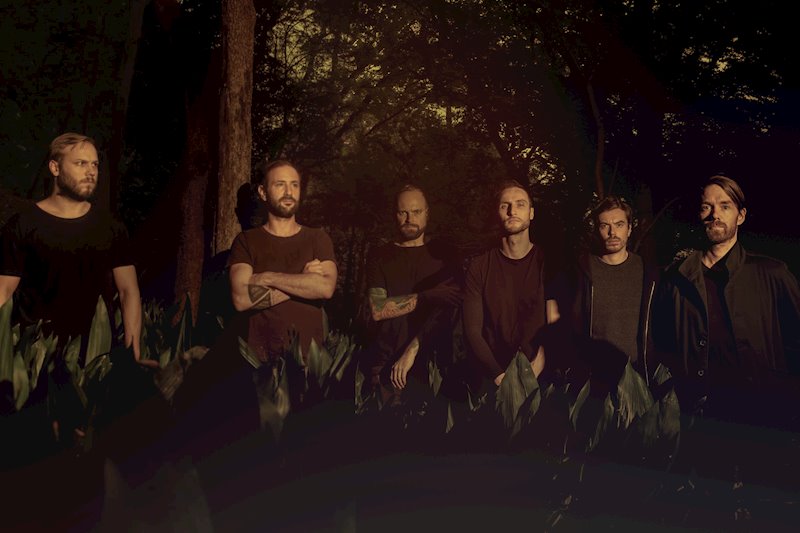
Stiamo vivendo una pandemia e ognuno di noi ne è stato toccato in un modo o nell’altro. Come ha influito su di te personalmente e come ha influito sulla band?
“Il 2020 ci ha dato un sacco di merda, ma credo di non essere l’unica persona al mondo a dirlo. Avevamo grandi progetti per quest’anno, il tour in Sud America a maggio, il tour negli Stati Uniti ad agosto, festival come Wacken, Metal Over Russia… tutto è andato a rotoli. Questo ci ha lasciato un po’ di tempo in più per concentrarci su altri progetti, come il libro fotografico di 130 pagine che abbiamo appena pubblicato insieme all’album, i caffè delle band, la ristrutturazione di Pelagic Records e la crescita del nostro team… quindi è stato un anno abbastanza produttivo, dopo tutto, ma più per l’etichetta che per la band. Da ottobre ho ricominciato a scrivere e ho più di 60 minuti di materiale nuovo per i The Ocean pronto a partire.”
Ho letto che avete iniziato a lavorare su questo disco e sul suo predecessore allo stesso tempo qualche anno fa. Quando è stato registrato ‘Phanerozoic II: Mesozoic | Cenozoic’?
“Tutte le canzoni di entrambi gli album sono state scritte più o meno nello stesso periodo, nelle estati del 2016 e del 2017. Abbiamo registrato la batteria per entrambi i dischi in Islanda nel febbraio 2018, quindi a quel tempo tutto il materiale per entrambi gli album, ‘Phanerozoic I’ e ‘Phanerozoic II’, era già stato scritto. Ci siamo poi concentrati sul finire la prima parte, che è stata pubblicata più tardi nello stesso anno, e solo dopo quella pubblicazione siamo tornati alla seconda parte, nel 2019. Finire quella sezione è stata un po’ una sfida, dato che siamo stati in tour praticamente otto mesi quell’anno, abbiamo finito di registrare i bassi on the road a novembre.”
Il concetto alla base dell’album e dell’intera saga è maestoso. Come è iniziato tutto? Quando hai scritto ‘Precrambian’ nel 2007, avevi già in mente di seguire il percorso che vi ha portato qui oggi con quest’ultimo disco?
“No. Di solito lavoro di album in album, e allora non avevo in mente il quadro generale. Ero immerso così profondamente in ‘Precambrian’, è stato un disco così difficile e complicato da comporre e da registrare, che una volta completato, mi sono sentito per la fine di quel calvario… e mentre già allora pensavo che potesse esserci un album come ‘Phanerozoic’ che continuava da dove ‘Precambrian’ aveva lasciato, volevo fare prima qualcosa di diverso. ‘Heliocentric’ è stato un nuovo inizio per la band: una nuova formazione, il primo album con Loic alla voce e canzoni scritte da un’angolazione diversa, con più attenzione che mai alla linea vocale. Anche dal punto di vista concettuale era completamente diverso e allora non vedevo alcun legame con ‘Precambrian’. Mi è venuto in mente solo dieci anni dopo, mentre stavo scrivendo quello che è diventato ‘Phanerozoic’, quando mi sono reso conto che c’era una tregua di vicinanza nel suono e nell’atmosfera con ‘Precambrian’. Poi non ci è voluto molto tempo prima che mi tornasse in mente il termine ‘Phanerozoic’, e mi è sembrato che fosse il momento giusto, per tornare indietro nel tempo e finire quello che avevamo iniziato dieci anni prima, e colmare, con quest’ultimo, il divario musicale e concettuale tra ‘Precambriano’ e ‘Heliocentric’.”
La struttura delle tracce in ‘Phanerozoic II: Mesozoic | Cenozoic’ cambia ed evolve da un brano all’altro come a simboleggiare la mutazione del pianeta. Puoi dirci qualcosa in più sul processo di songwriting e come e perché alcuni episodi musicali sono stati abbinati al momento a cui si riferiscono?
“Come ho detto, tutte le canzoni di entrambi gli album sono state scritte più o meno nello stesso periodo, e mi è sempre stato chiaro quali canzoni sarebbero finite nella prima parte: quel materiale era piuttosto coerente nello stile, nel ritmo, nell’atmosfera… le tracce della seconda parte coprivano una gamma molto più ampia di stile e di estetica musicale, e in un certo senso, la seconda metà dell’album suona meno arcaica e più moderna del suo predecessore, riflettendo il nostro arrivo nell’era moderna. Questo album è composto da brani molto diversi. ‘Triassic’, l’opener, è stato ispirato dal nostro primo viaggio in assoluto (come band) in India nel 2014, e lì sentirete anche una serie di strani strumenti (soprattutto nella versione strumentale) che abbiamo registrato in tour in Armenia l’anno scorso. ‘Jurassic | Cretaceous’ è il brano su cui ho trascorso più tempo in assoluto da quando ho iniziato a scrivere musica. Ho iniziato a scriverlo cinque anni fa e non è mai stato finito, ma ci sono sempre tornato e ho continuato a lavorarci… ‘Eocene’, invece, è stato un po’ un “incidente”. Si basa su una parte di chitarra già usata in ‘Jurassic | Cretaceous’, ed è una cosa che abbiamo fatto su più livelli all’interno dell’album: riutilizzare idee che sono già state usate in un altro contesto, per ribadire l’idea dell’eterna ricorrenza, l’eterno ripetersi, che è il tema lirico centrale dei due ‘Phanerozoic’. Il testo del brano in chiusura, ‘Holocene’, si ricollega al testo della opener ‘Triassic’, ecc. Poi ci sono tre tracce che Paul (Seidel, batterista, nrd) ha scritto: ‘Oligocene’, ‘Holocene’ e ‘Miocene’. Sono più dirette in termini di sonorizzazione e due di esse hanno una spessa base elettronica. Il fatto che Peter (Voigtmann, synths, ndr) sia diventato un membro fisso della band ha davvero cambiato e aggiunto molto al nostro sound dai tempi di ‘Phanerozoic I’. Si è impegnato molto nelle sezioni strumentali, ma anche il tono della chitarra è colorato dai suoi moogs sottostanti. Non li noterai sempre “in the face”, ma quando li metti in muto ti accorgerai subito che manca qualcosa. Alcune canzoni sono state scritte pensando a particolari eventi di una certa epoca (come in ‘Jurassic | Cretaceous’ o ‘Triassic’), mentre altre sono state già scritte e poi abbinate alle rispettive epoche.”
In ‘Jurassic | Cretaceous’ il chorus recita: “We are just like reptiles / Giant rulers of the world / Within the blink of an eye / Wiped off the face of the earth” (Siamo proprio come rettili / Giganti dominatori del mondo / In un batter d’occhio / Cancellati dalla faccia della terra). Come pensi che la consapevolezza dell’effimerità dell’uomo possa essere usata da noi a nostro vantaggio?
“Siamo tutti consapevoli del fatto che moriremo e che i nostri figli moriranno, ma finché il pianeta sembra rendere il tutto un po’ più lungo del nostro figlio più piccolo, sembra che ci vada bene portare avanti le nostre azioni, nonostante le loro implicazioni di cui siamo tutti ben consapevoli, con un atteggiamento da “dopo di noi, il diluvio”. Penso che stia lentamente cambiando, ci sono seri tentativi fatti in Europa per migliorare la situazione ma non è sufficiente, e il signor Covfefe (Trump, ndr) certamente non ha aiutato a raggiungere gli obiettivi che possono essere raggiunti solo a livello internazionale. Ottenere il consenso per accordi internazionali vincolanti su larga scala in materia di misure per il cambiamento climatico è una delle più grandi sfide dell’umanità, e non sono ancora del tutto pronto a rinunciare alla speranza che alla fine ci arriveremo prima che sia troppo tardi. Ma la speranza sta iniziando a svanire…”
Dato che credo che i testi siano cruciali soprattutto per un concetto come il vostro, da dove nasce l’idea di rilasciare anche versioni strumentali di tutti i brani? Pensi che la musica da sola raggiunga l’ascoltatore in modo sostanzialmente diverso, se separata dalla voce e dal testo?
“Sì, in un certo senso fornisce un’esperienza diversa. Non migliore o peggiore, solo diversa. Siamo così condizionati a prestare attenzione alla voce che molti dettagli musicali vengono annegati o persi; d’altra parte, non appena si toglie la voce, questi dettagli iniziano a brillare. Quindi è un po’ un esperimento audio-psicologico. Ascolto molta musica strumentale, e mi piace sempre avere strumenti offerti parallelamente alle versioni vocali – anche quando amo molto il vocalist di una band. Ti offre solo quell’altra prospettiva. Le nostre versioni strumentali non si limitano a solo non avere la voce – sono mix completamente diversi. Se si confronta la versione strumentale del brano d’apertura ‘Triassic’ con la versione vocale, si noterà un gruppo di strumenti diversi (per lo più fiati, che abbiamo registrato in Armenia) sulla versione strumentale, che non sono affatto udibili sulla versione vocale. Lì sarebbe stato troppo. Lo stesso vale per ‘Devonian’, ci sono parti di violoncello sulla versione strumentale che non abbiamo usato per la versione vocale. Quindi ascoltare gli strumenti è un’esperienza completamente diversa.”
Oltre ai molti cambi di formazione, cosa è cambiato di più nella band sin dagli inizi?
“La band è così vecchia, siamo in giro da 20 anni ormai, che quando paragono i The Ocean del 2020 con i The Ocean del 2010 trovo due band molto distanti. Persone diverse, suono diverso, strumenti diversi, fasi diverse della nostra vita. Ma alcuni elementi sono rimaste coerenti anche nel corso degli anni, alcuni trucchi che uso nella scrittura di canzoni, un’ossessione generale per i dettagli, il lavoro artistico (fatto in modo consistente da Martin Kvamme fin dai tempi di ‘Precambrian’) e l’atmosfera generale che caratterizza la maggior parte delle canzoni che scrivo, quell’elemento centrale “oceanico” o in qualsiasi modo tu lo voglia chiamare. I cambiamenti di line up hanno portato battute d’arresto, ma hanno anche portato una fresca brezza di ispirazione e la possibilità di nuovi inizi. Sono felice di dire che la formazione è ormai stabile, siamo tutti cresciuti e penso che ognuno di noi si sia reso conto di cosa abbiamo con questa band, di quale incredibile privilegio sia quello di poter essere pagati per andare in tour e suonare con un buon gruppo di persone in posti strani sparsi il mondo. Tutti noi amiamo così tanto tutto questo, e a causa dell’instabilità del passato siamo più consapevoli ora di cosa è importante per far funzionare questa band insieme.”
Qual è l’album dei The Ocean di cui vai più fiero?
“Questa domanda è come chiedere a un genitore chi è il suo figlio preferito. Non posso dirlo, tutti gli album che abbiamo fatto sono testimonianze di un certo periodo della nostra vita, modellate dalle persone della band e intorno a noi e dalle lotte e dalle gioie e sfide che abbiamo dovuto affrontare. Hanno tutti un’impronta temporale. Se potessi rifare certe cose, certe scelte di suoni o arrangiamenti o qualsiasi altra cosa, probabilmente lo farei, ma è un bene che questo non sia possibile, per preservarne l’autenticità e la storicità. Personalmente penso che ‘Phanerozoic I’ sia il più vicino a come ho sempre voluto che questa band suonasse. Sono ugualmente soddisfatto di ‘Pelagial’ e ‘Phanerozoic II’, più sperimentali e più ampi dal punto di vista stilistico.”
Quali sono le band che ti hanno influenzato maggiormente all’inizio? E quali quelle che ascolti ora?
“Sono cresciuto nella scena hardcore degli anni ’90, ascoltando band come Sick of It All, Gorilla Biscuits, Side By Side, poi roba più abrasiva come Unbroken, Groundwork, Converge, Coalesce, Breach… Neurosis e Swans erano altre band che ammiravo. Allo stesso tempo ho sempre avuto un gusto musicale eclettico, da adolescente ascoltavo Tori Amos tanto quanto la musica classica di Chopin, Dvorjak o Schostakovich. Oggi ascolto molta musica elettronica contemporanea, ma mi piacciono ancora le chitarre pesanti. Quello che pubblichiamo con la Pelagic Records è una sintesi piuttosto accurata del mio attuale gusto musicale. Le band che trovo ispiratrici e innovative sono Abraham dalla Svizzera, LLNNN da Copenhagen, Briqueville dal Belgio, Pg.lost e Barrens, che quest’anno ha pubblicato un incredibile album di debutto, anche Psychonaut dai Paesi Bassi e Saver dalla Norvegia… tutte band Pelagic. Per quanto riguarda i gruppi non sulla nostra etichetta, gli ultimi album Insect Ark, Kjell Braten, Apache Sun e gli Heliocentrics sono stati tutti incredibili. Ho un’enorme playlist su Spotify con 13 ore di musica chiamata “Isolation Medication” che ti dà una buona idea di quello che sto ascoltando, vecchio e nuovo.”
Qualche progetto per il prossimo futuro? Farete qualche concerto live streaming?
“Stiamo valutando varie opzioni. Non posso dire di più al momento, è qualcosa che ci piacerebbe fare, ma non è stato facile per noi riunirci per provare o fare qualcosa quest’anno, con Mathias che vive a Stoccolma e Loic in Svizzera e il resto di noi a Berlino. Siamo finalmente in procinto di trasferirci in un nuovo spazio per le prove/studio nei locali del magazzino di Pelagic, ed è una cosa che ci entusiasma molto, visto che la band è rimasta senza casa negli ultimi anni. Avevamo una stanza minuscola e di merda e in pratica abbiamo fatto le prove solo prima dei tour. Questo nuovo spazio apre nuove e grandi possibilità e trascorreremo la prima metà del 2021 stabilendoci lì come si deve. Poi a giugno abbiamo in programma un grande tour con PG.Lost, Hypno5e e Svalbard, incrociando le dita il mondo tornerà a uno stato più o meno normale per allora.”
C’è qualcos’altro che vorresti aggiungere per i lettori di Loud and Proud?
“Penso che tu abbia coperto tutto abbastanza bene! Molti fan ci hanno inviato messaggi riguardanti il nostro recente annuncio del tour di giugno, chiedendoci perché non c’è l’Italia. Il motivo è che quando quel tour è stato inizialmente prenotato, l’Italia era uno dei punti caldi della pandemia e quindi sembrava meglio evitarla. Più tardi, quando la situazione è cambiata, l’intero percorso è stato spostato e purtroppo non c’era spazio per inserire uno show italiano. Ma state tranquilli, torneremo in Italia quest’estate, se gli spettacoli potranno andare avanti. Grazie per il supporto.”

Discografia:
Fluxion (2004)
Aeolian (2005)
Precambrian (2007)
Heliocentric (2010)
Anthropocentric (2010)
Pelagial (2013)
Phanerozoic I: Palaeozoic (2018)
Phanerozoic II: Mesozoic / Cenozoic (2020)
Line-up:
Loïc Rossetti – voce
Robin Staps – chitarra
David Ramis Åhfeldt – chitarra
Mattias Hagerstrand – basso
Paul Seidel – batteria (e vocals su ‘Holocene’)
Per maggiori informazioni, qui la pagina Facebook della band.
ENGLISH VERSION
We’re living through a pandemic and each one of us has been touched by it one way or another. How did it affect you personally and how did it affect the band?
“2020 has given us a lot of shit, but I guess I’m not the only person in the world saying that. We had big plans for this year, South America tour in May, US Tour in August, festivals like Wacken, Metal Over Russia… all fell through. That left us with a bit of extra time to focus on other projects though, such as the 130 pages ‘Phanerozoic’ photo book which we just released along with the album, Pelagic band coffees and restructuring Pelagic Records and growing our team… so it’s been a quite productive year after all, but more for the label than for the band. Since October I have been writing again and have more than 60 minutes of new The Ocean material ready to go.”
I read you started working on this record and its predecessor at the same time a few years ago. When has ‘Phanerozoic II: Mesozoic | Cenozoic’ actually been recorded?
“All songs for both albums were written around the same time, in the summers of 2016 and 2017. We recorded drums for both album in Iceland in February 2018, so by that time all material for both albums, ‘Phanerozoic I’ and ‘II’, was already written. We then focused on finishing the first part, which was released later that year, and only after that was released we went back to the second part, in 2019. Finishing that was a bit of a challenge, since we’ve been on tour pretty much 8 months of that year, we finished recording bass on tour in November.”
The concept behind the album and the whole saga is majestic. How did everything start? When you wrote ‘Precrambian’ back in 2007, did you already have in mind to follow the path that brought you here today with the latest record?
“No, I didn’t. I usually work from album to album, and back then I didn’t have the bigger picture in mind. I was immersed so deeply into ‘Precambrian’, it was such a hard and complicated album to make and record, and when it was done I was happy that this ordeal was over… and while I was thinking, already back then, that there could be a ‘Phanerozoic’ album continuing where ‘Precambrian’ left off, I wanted to do something different first. ‘Heliocentric’ was a new beginning for the band: new lineup, the first album with Loic on vocals and songs written from a different angle, with more focus on vocals than ever before. Conceptually it was also completely different and back then I didn’t see any connection with ‘Precambrian’. It dawned on me only 10 years later, when I was writing what became ‘Phanerozoic’ and realised that there was a certain proximity in sound and vibe to ‘Precambrian’. Then it didn’t take long until the term ‘Phanerozoic’ came back to mind, and it felt like it was the right time now, to go back in time and finish what we started 10 years before, and close the musical and conceptual gap between ‘Precambrian’ and ‘Heliocentric’ with ‘Phanerozoic’.”
The song structure in ‘Phanerozoic II: Mesozoic | Cenozoic’ changes and evolves from one track to another, as if symbolising the mutation of the planet. Can you tell us about your songwriting process and how and why certain musical episodes have been matched to the moment to which they refer?
“As I mentioned, all songs for both albums were written around the same time, and it was always clear to me which songs were to end up on the fist part: that material was pretty coherent in style, tempo, vibe… the songs for the 2nd part were covering a much larger range of style and musical aesthetics, and in a way, the 2nd half of album sounds less archaic and more modern than its predecessor, reflecting our arrival in the modern age. This album is made up of very different tracks. ‘Triassic’, the opener was inspired by our first ever trip (as a band) to India in 2014, and you will also hear a bunch of weird instruments there (especially on the instrumental version) that we recorded on tour in Armenia last year. ‘Jurassic | Cretaceous’ is the one track I spent most time on, ever since I started writing music. I already started writing it 5 years ago and it was never finished, but I always went back to it and continued working on it… ‘Eocene’ was a bit of an “accident”. It’s based on one guitar part that was already used in ‘Jurassic | Cretaceous’, and that’s something we’ve been doing on multiple levels within the album; reusing ideas that have already been used in another context, in order to reiterate the idea of eternal recurrence, which is the central lyrical theme on the ‘Phanerozoic’ albums. The lyrics of closing track ‘Holocene’ are re-connecting to the lyrics in opener ‘Triassic’, etc. Then there are 3 tracks that Paul wrote: ‘Oligocene’, ‘Holocene’ and ‘Miocene’. They’re more straight forward in terms of song-writing and 2 of them have a thick electronic base. Peter becoming a fix band member has really changed and added a lot to our sound since ‘Phanerozoic I’. He put a lot of effort into the instrumental sections, but even the guitar tone is coloured by his underlaying moogs. You won’t always notice them “in your face”, but when you mute them you’ll instantly realise something is missing. Some songs were written with particular events of a certain era in mind (such as ‘Jurassic | Cretaceous’ or ‘Triassic’ or ‘Holocene’), others were already written and then matched to the respective eras.
In ‘Jurassic | Cretaceous’ the chorus goes “We are just like reptiles / Giant rulers of the world / Within the blink of an eye / Wiped off the face of the earth”. How do you think the awareness of ephemerality can be used by us to our advantage?
“Well that is not really working out, is it? We’re all aware that we’re gonna die, and that our children are gonna die, but as long as the planet seems to make it just a tad longer than our youngest child we seem to be OK with carrying on with our actions and the implications of our actions of which we are all well aware, with an “after us the flood” attitude. I think it’s slowly changing, there are serious attempts made in Europe to improve the situation but it’s not enough, and Mr Covfefe (Trump, ndr) certainly didn’t help attaining the goals that can only be reached internationally. Getting the consensus for large scale binding international agreements, regarding climate change measures, is one of humanity’s greatest challenges, and I’m not entirely ready to give up hope yet that we will eventually get there before it’s too late. It’s fading though…”
As I believe lyrics are crucial especially for a concept like yours, where does the idea of releasing instrumental versions of all tracks come from? Do you think the music alone reaches a listener in a substantially different way if separated from the voice and the lyrics?
“Yeah, in a way it does provide a different experience when you listen to instrumentals. Not better or worse, just different. We are so conditioned to paying attention to vocals that a lot of details get drowned or lost when you have vocals in music; on the other hand as soon as you take the vocals away these details will start to shine. So it’s a bit of an audio-psychological experiment. I listen to a lot of instrumental music, and I always love to have instrumentals offered parallel to the vocal versions – even when I really love the vocalist of a band. It just offers you that other perspective. Our instrumental mixes are not just bounces with muted vocals – they are entirely different mixes. If you compare the instrumental version of opening track ‘Triassic’ with the vocal version, you will notice a bunch of different instruments (mostly woodwinds here that we recorded in Armenia) on the instrumental version, that are not audible at all on the vocal version. It would have been too much there. The same with ‘Devonian’, there are cello parts on the instrumental version that we didn’t use for the vocal version. So listening to the instrumentals really is a different experience altogether.”
Beside the many line-up changes, what has changed more in your band since the beginning?
The band is so old, we’ve been around for 20 years now and I don’t even need to go back to the very beginning, even when I compare The Ocean of 2020 with even The Ocean of 2010, it was an entirely different band back then. Different people, different sound, different instruments, different stages of our lives. But some things have also remained consistent over the years, certain tricks I use in song writing, a general obsession with details, artwork (consistently done by Martin Kvamme since ‘Precambrian’) and the general vibe that characterises most of the songs I write, that oceanic core element or whatever. The lineup changes brought setbacks, but they also brought a fresh breeze of inspiration and the chance for new beginnings. I’m happy to say that the lineup is now stable, we’ve all grown up and I think each of us realised what we have with this band, what amazing privilege it is to be able to get paid for touring and playing music with a good bunch of people in weird places all around the globe. We all love this so much, and because of the instability in the past we are more aware now of certain things that are important for making this work together.”
What is the album that makes you the most proud?
“That question is like asking a parent who is your favourite child. I can’t say that, all albums we made are testimonies of a certain time in our lives, shaped by the people in the band and around us and the struggles and joys and challenges we were facing. They all have a time stamp. If I could redo certain things, certain choices of sounds or arrangements or whatever then I probably would, but it’s good that this is not possible, to preserve the authenticity and historicity. I personally think that Phanerozoic I is the closest to how I always wanted this band to sound. I’m equally happy with ‘Pelagial’ and ‘Phanerozoic II’, which is more experimental and broad stylistically.”
What bands influenced you the most at the beginning? And what music do you listen to these days?
“I grew up in the hardcore scene of the 90s, listening to bands like Sick of It All, Gorilla Biscuits, Side By Side, then more abrasive stuff like Unbroken, Groundwork, Converge, Coalesce, Breach… Neurosis and the Swans were bands I admired. At the same time I’ve always had a diverse taste of music, as a teenager I was listening to Tori Amos as much as to classical music by Chopin, Dvorjak or Schostakovich. Nowadays I listen to a lot of contemporary electronic music, but I’m still into heavy guitars as well. What we release with Pelagic Records is a pretty accurate summary of my current musical taste. Bands that I find inspiring and groundbreaking are Abraham from Switzerland, LLNN from Copenhagen, Briqueville from Belgium, I love PG.lost and Barrens, who released an incredible debut album this year, also Psychonaut from the Netherlands and Saver from Norway… all Pelagic bands. For non-Pelagic bands, the latest albums Insect Ark, Kjell Braten, Apache Sun and the Heliocentrics were all amazing. I have a huge Spotifiy playlist with 13 hours of music called “Isolation Medication” that gives you a pretty good idea of what I’m listening to, old and new.”
Any plans for the foreseeable future? Will you be doing any live streaming concerts at all?
“We’re looking into options. I can’t really say more at the moment, it’s something we’d like to do but it hasn’t been easy for us to get together to rehearse or do anything this year, with Mathias living in Stockholm and Loic in Switzerland and the rest of us in Berlin. We are finally in the process of moving into a new rehearsal/studio space in the premises of the Pelagic warehouse, so that is something we’re very excited about, as the band has been homeless for the past years. We had a tiny, shitty room and we basically only rehearsed before tours. This new space opens up great new possibilities and we will spend the first half of 2021 establishing ourselves there properly. Then in June we have a big tour planned with PG.Lost, Hypno5e and Svalbard, fingers crossed the world will be back to a more or less normal state by then.”
Anything else you’d like to add for the readers of Loud and Proud?
“I think you’ve covered it all pretty well! A lot of fans have sent us messages regarding our recent tour announcement in June asking why there is no Italy in it. The reason is that when that tour was initially booked, Italy was one of the corona hotspots and so it seemed best to be avoided on this run… and later when that changed, the whole routing was just moved and there was no space to squeeze in any Italian shows. But rest assured, we will come back to Italy this summer, if shows can go ahead at all.”

Articoli Correlati
 Netgate ADV