
HATE – Oscurità pagana

Dall’oscura nebulosa del metal estremo polacco, l’ensemble blackened death metal Hate è tornato con il nuovo album, ‘Rugia‘ (qui la nostra recensione), pubblicato dalla Metal Blade Records, due anni dopo l’acclamato ‘Auric Gates Of Veles’. Il nuovo disco è un’opera annichilente e spietata di death metal arricchito con forti sfumature di black metal. Forse, questa volta c’è un po’ meno spazio per i gelidi tremoli melodici che hanno segnato l’album precedente, ma la band non lesina su blast beats, passaggi epici, riff taglienti né su vocals brutali e sempre comprensibili. ‘Rugia‘ conferma che la band è in piena forma e un vero punto di riferimento per tutti coloro che vogliono mescolare black e death metal. Abbiamo raggiunto Adam “The First Sinner” Buszko, vocalist degli Hate, per qualche domanda ed ecco cosa è venuto fuori.
(Please scroll down for the ENGLISH version of the interview)
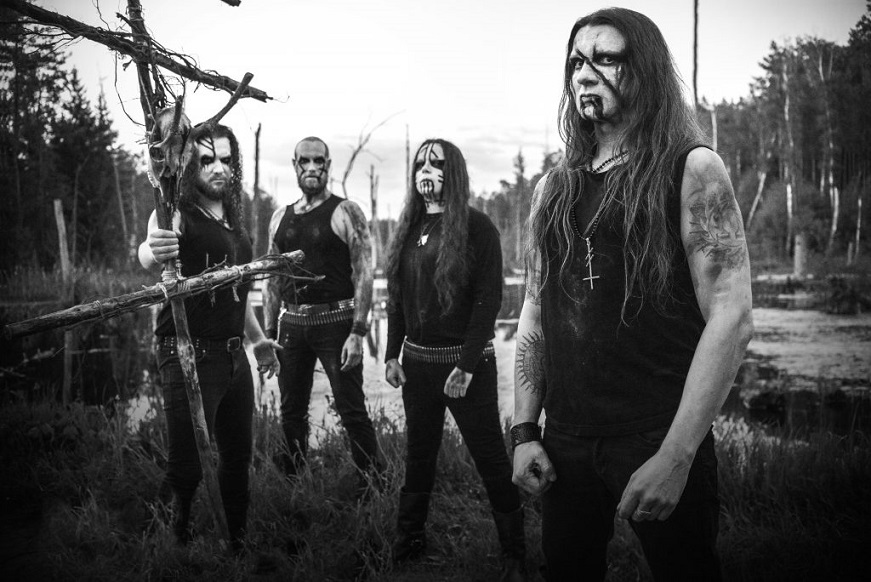
È un grande onore avere ATF Sinner degli Hate a Loud And Proud Italy! Benvenuto! Iniziamo a parlare del titolo della vostra ultima fatica, ‘Rugia’: questo termine è citato anche in ‘Path To Arkhen’ nel vostro precedente album e si riferisce ad un’isola nel Mar Baltico. Puoi dirci qualcosa di più?
“Ciao, sono felice di incontrarti qui! Parlando di ‘Rugia’, è un nome arcaico dell’odierna isola tedesca sul Mar Baltico chiamata Rügen. Nei tempi antichi, Rügen o Rugia era un luogo di pellegrinaggio sacro per i popoli slavi pagani. Era il cuore della cultura slava occidentale, ospitando la leggendaria roccaforte di Arkona. Era l’ultimo bastione del paganesimo per gli slavi occidentali, ed esisteva fino al XII secolo. L’album è nel suo nucleo un omaggio a Rugia e alle sue tribù e alla cultura che hanno creato. E sì, è una continuazione di ‘Auric Gates of Veles’, sia musicalmente che per quanto riguarda il contenuto.”
Parlando di musica, secondo me, ‘Rugia’ è un degno successore dell’eccellente ‘Auric Gates Of Veles’, e con questa coppia di album gli Hate si confermano come uno dei principali act in circolazione in quella particolare zona dove il death incontra il black metal. Infatti, penso che al giorno d’oggi il vostro sound sia la pura definizione di blackened death metal polacco. Quali sono le tue sensazioni riguardo a ‘Rugia’ all’interno della vostra discografia?
“Beh, credo che tu abbia ragione nel dire che ha tutti gli elementi principali del metal estremo polacco. Per quanto riguarda la produzione, ha un sacco di “ruvidità”, quindi non è molto moderno o pulito. Volevamo che fosse abbastanza old-school, ecco perché abbiamo sperimentato parecchio durante il mixaggio e il mastering dell’album. Alla fine abbiamo deciso di usare un registratore a nastro vecchia scuola per i mixaggi. Questo apparecchio è stato realizzato negli anni ’80 e lavora su nastri spessi che sono ancora prodotti da una sola fabbrica in Germania. Penso che il suono finale abbia questo suono aspro molto caratteristico, con la sezione ritmica ben in evidenza.”
Ho ragione se dico che ‘Rugia’ è un po’ meno black metal rispetto ad ‘Auric Gates Of Veles’? Voglio dire, c’è ancora una forte componente atmosferica oscura e naturalmente una sessione ritmica tellurica, ma meno gelide sezioni in tremolo picking. State tornando alle vostre radici death metal o forse nel prossimo album gli elementi black metal diventeranno di nuovo più pronunciati?
“Penso che da un lato sia un ritorno alle nostre radici musicali, che è il death metal degli anni novanta. D’altra parte, l’album ha molte parti monumentali, che si possono definire black o doom metal. Il suono del nuovo disco è piuttosto scuro e duro (simile ad ‘Auric Gates Of Veles’), con un forte tocco ambient. La mia voce su ‘Rugia’ è molto più varia che nei nostri dischi precedenti. Ho usato tre timbri diversi, a volte messi insieme come tre strati di linee vocali. È come se ci fossero tre persone diverse a fare le vocals nella maggior parte delle canzoni. Volevo arricchire la narrazione e rafforzare il più possibile alcuni cori. Ci sono molti elementi orientati al black metal e campionature/sottofondi ambient che costituiscono il nostro stile. Direi che è una naturale prosecuzione dei nostri precedenti album ‘Tremendum’ (2017) e ‘Auric Gates of Veles’ (2019), che combinano l’aggressività con un certo carattere epico delle canzoni.”
Apprezzo molto la vostra crescente focalizzazione sull’antica mitologia slava, aggiunge ulteriore peculiarità alla musica degli Hate: questa tendenza continuerà nei prossimi album? Considerate la possibile introduzione di elementi di musica popolare slava nella vostra musica, o gli Hate non contemplano suoni diversi dal death e dal black metal?
“Beh, sono abbastanza sicuro che continueremo con questo tema perché è una grande collezione di storie universali e verità sull’esistenza – una sorta di cornice in cui si possono trovare un sacco di significati che potrebbero essere importanti per la gente contemporanea. Per me è come un viaggio personale in cui sto riscoprendo il mio Io più profondo. Penso che tutti abbiano un’identità più profonda, che può essere chiamata (in mancanza di un termine migliore) “anima pagana”. Questa identità è profondamente radicata nel mondo naturale, fortemente connessa al Cosmo, alla Madre Terra e ad altre entità viventi e non viventi. Se si rifiutano tutte le stronzate religiose, i dogmi e le etichette che funzionano nel nostro cosiddetto “mondo civilizzato”, si ha l’opportunità di arrivare all’essenza dell’essere e vedere quanto tutte le cose sono collegate. Quando si tratta di musica, la mitologia slava richiede forme più elaborate e sono abbastanza sicuro che gli elementi folk si inserirebbero abbastanza naturalmente. Sono abbastanza sicuro che esploreremo questo in futuro. Inoltre, sono necessarie anche più componenti visive, ecco perché abbiamo fatto due video per le canzoni di ‘Rugia’. Il primo, intitolato ‘Resurgence’, è già stato presentato in anteprima due settimane fa. Inoltre, le nostre scenografie saranno più elaborate. Quindi, anche i nostri spettacoli avranno un aspetto molto diverso d’ora in poi.”
Nonostante l’indiscussa pesantezza, ferocia e potenza oscura che segnano i brani di ‘Rugia’, diverse tracce sono così dannatamente facili da ascoltare: Penso alla frenetica ‘The Wolf Queen’, a ‘Exiles Of Pantheon’ con il suo chorus groovy o all’esaltante gran finale di ‘Sacred Dnieper’: pensi che alcuni brani di questo album diventeranno dei classici nei vostri live?
“Sono sicuro che ogni canzone di ‘Rugia’ potrebbe essere anche una grande canzone dal vivo, e questo era il mio obiettivo mentre lavoravo alle composizioni. Al momento, suoniamo ‘The Wolf Queen’ e “Exiles Of Pantheon” sul palco, ma sono sicuro che presto aggiungeremo altre nuove canzoni al nostro repertorio live.”
In che modo la presenza del nuovo batterista Nar-Sil ha cambiato, se lo ha fatto, il vostro approccio nella scrittura dei nuovi brani?
“Penso che la sua presenza abbia avuto un’influenza piuttosto importante, perché conoscendo le sue capacità volevo mettere più enfasi sulle parti tecniche delle canzoni. Anche lavorare con lui è stato abbastanza facile perché condividiamo molti gusti e interessi musicali nonostante la differenza di età. Così ‘Rugia’ ha molta atmosfera e anche molta ferocia. Penso che l’album abbia tutte le caratteristiche per essere definito un album 100% Hate.”

Nei testi dei tuoi ultimi lavori narri miti oscuri riguardanti Veles e altre divinità del pantheon slavo. Ma quali gruppi metal compongono il tuo pantheon personale? Forse quelle che più vi hanno influenzato come musicisti…?
“Beh, credo che la vera ispirazione venga principalmente dall’interno. Quindi, cerco di ascoltare prima me stesso e di cercare formule musicali che trasmettano le emozioni e le idee che ho. Di solito io propongo le idee principali e gli arrangiamenti su cui lavorare, e gli altri ragazzi si uniscono al processo in fasi diverse man mano che andiamo avanti. Se mi chiedi quali sono gli artisti che mi ispirano di più, penso che la maggior parte di essi provenga da generi non metal. Sono un appassionato di band come Ministry, Nine Inch Nails, Fields Of The Nephilim e anche Diamanda Galas, Swans, Dead Can Dance o la band horror rap City Morgue. Quindi, come vedi ci sono molte direzioni diverse.”
C’è qualche band “giovane” – voglio dire, qualche gruppo emerso negli ultimi anni – che apprezzi e ascolti particolarmente?
“Sì, ho citato i City Morgue per esempio. Credo che questo tipo di miscela aggressiva di industrial, horror rap con elementi di metal con una grande quantità di malinconia sia qualcosa che mi attrae.”
Quali sono i vostri piani relativi ai tour nel prossimo anno, sperando che non ci siano più restrizioni legate ai COVID? Verrete a suonare qui in Italia?
“Abbiamo 3 tour già confermati per il prossimo anno e sembra che sarà un periodo molto impegnativo per noi. Per prima cosa, suoniamo il tour europeo con Belphegor e Suffocation che inizia a febbraio. Questo sarà una continuazione del tour che stavamo facendo quando è scoppiata la pandemia. Quindi, in un certo senso torniamo dove ci siamo fermati. Recentemente un giornalista ha definito gli Hate “guerrieri della strada”. Penso che sia assolutamente vero per noi. Suonare dal vivo è l’essenza di quello che facciamo, e non vediamo l’ora di essere di nuovo in tour. Specialmente con materiale come ‘Rugia’. Sono sicuro che sfrutteremo ogni opportunità per tornare in Italia. È sempre un piacere visitare il vostro paese.”
Per concludere questa intervista, c’è qualcosa che vorresti aggiungere per i lettori di Loud And Proud? Grazie per il vostro tempo!
“Sono felice di essere vostro ospite e voglio salutare tutti i nostri seguaci e fan in Italia. Assicuratevi di guardare i due nuovi video per le canzoni di ‘Rugia’ che abbiamo pubblicato recentemente: ‘Resurgence’ e ‘Exiles Of Pantheon’. Grazie mille per l’intervista.”
Discografia:
Daemon Qui Fecit Terram (1996)
Lord Is Avenger (1998)
Cain’s Way (2000)
Awakening Of The Liar (2003)
Anaclasis: A Haunting Gospel Of Malice And Hatred (2005)
Morphosis (2008)
Erebos (2010)
Solarflesh: A Gospel Of Radiant Divinity (2013)
Crvsade:Zero (2015)
Tremendum (2017)
Auric Gates Of Veles (2019)
Rugia (2021)
Line-up:
ATF Sinner – voce, chitarra
Domin – chitarra
Tiermes – basso
Nar-Sil – batteria
Per maggiori informazioni, qui la pagina Facebook della band.
ENGLISH VERSION
From the obscure nebula of Polish extreme metal, blackened death ensemble Hate is back with the new opus, ‘Rugia’(here our review), published by Metal Blade Records, two years after the widely acclaimed ‘Auric Gates Of Veles’. The new effort is a crushing and merciless piece of death metal enriched with strong shades of black metal. Possibly, this time there is a little less room for the frigid melodic tremolos that marked the previous album, but the band does not skimp on blast beats, epic passages, edgy riffs nor on brutal and always comprehensible vocals. ‘Rugia’ confirms that the band is in full shape and a true benchmark for everyone that wants to mix black and death metal. We reached out to Adam “The First Sinner” Buszko, vocalist of Hate, for a few questions and here’s what came up.
It is a great honour having ATF Sinner from Hate at Loud And Proud Italy! Welcome! Let’s start talking about the title of your last effort, ‘Rugia’: this term is cited also in ‘Path To Arkhen’ in your previous album and it refers to an island in the Baltic Sea. Can you tell us something more?
“Hi, I’m glad to meet you here! Talking about ‘Rugia’, it is an archaic name of today’s German island on the Baltic Sea called Rügen. In ancient times, Rügen or Rugia, was a site of holy pilgrimage to the pagan Slavic people. It was the very heart of the western Slavic culture, housing the fabled stronghold of Arkona. It was the last bastion of paganism for western Slavs that existed until XII century. The album is at its core a tribute to Rugia and its tribes and the culture they created. And yes, it’s a continuation of ‘Auric Gates of Veles’, both musically and when it comes to the content.”
Talking about music, in my opinion, ‘Rugia’ is a worthy successor of the excellent ‘Auric Gates Of Veles’, and with this couple of albums Hate confirms itself as one of the main acts around in that particular zone where death meets black metal. Indeed, I think that nowadays your sound is the pure definition of Polish blackened death metal. What are your feelings about ‘Rugia’ within your discography?
“Well, I guess you are right saying it has all the main elements of the Polish extreme metal. When it comes to production, it has a lot of “harshness”, so it’s not very modern or clean. We wanted it to be quite old-school way, that’s why we experimented quite a lot while mixing and mastering the album. Finally, we decided to use some old-school tape recorder for the mixes. It was produced in the 80ties and it works on thick tapes that are still produced by just one manufacture in Germany. I think the final sound has this harsh very characteristic sound, with rhythm section exposed.”
Am I right if I say that ‘Rugia’ is a little less black metal compared with ‘Auric Gates Of Veles’? I mean, there is still a strong dark atmospheric vibe and of course a telluric rhythmic session, but fewer icy tremolos. Are you moving back to your death metal roots or maybe in the next album black metal elements will become more pronounced again?
“I think on one hand it’s a return to our musical roots, which is death metal of the nineties. On the other hand, it has a lot of monumental parts, which you can call black or doom metal. The sound of the new record is rather dark and harsh (similar to ‘Auric Gates of Veles’), with a strong ambient touch to it. My vocals on ‘Rugia’ are much more diverse than on our previous records. I used three different timbres, sometimes put together like three layers of vocal lines. It’s like three different people making vocals in most songs. I wanted to enrich the narrative and strengthen some choirs as much as possible. There are a lot of black-metal oriented elements and samples/ambient backgrounds that constitute our style. I’d say it’s a natural consequence of our previous albums ‘Tremendum’ (2017) and ‘Auric Gates of Veles’ (2019), which combine aggressiveness with some epic character of the songs.”
I really appreciate your increasing focusing on ancient Slavonic mythology, it adds further peculiarity to Hate’s music: will this trend continue in the next albums? Do you consider the possible introduction of Slavic folk music elements in your music, or Hate do not contemplate sounds other than death and black metal?
“Well, I’m quite sure we will continue with this theme as it’s a great collection of universal stories and truths about existence – a kind of frame in which you can find a lot of meanings that might be important for contemporary living people. For me it’s like a personal journey on which I am rediscovering my deeper Self. I think everybody has some deeper, more profound identity, which can be called (for lack of a better term) a “pagan soul”. This identity is deeply rooted in natural world, strongly connected to the Cosmos, Mother Earth and other living and non-living entities. If you reject all the religious bullshit, dogmas and labels that function in our so called « civilized world », you have an opportunity to get to the essence of being and see how much all things are connected. When it comes to music, the Slavic mythology calls for more elaborate forms and I’m quite sure that folk elements would fit in quite naturally. I’m quite sure we will explore this in the future. Also, more visual forms are needed, that’s why we have made two regular videos for the songs from ‘Rugia’. The first one entitled ‘Resurgence’ has been already premiered two weeks ago. Also, our stage designs / scenography is going to be more elaborate. So, our shows will look quite different from now on too.”
Despite the undisputed heaviness, ferocity and dark power that mark the tracks of ‘Rugia’, different tracks are so damn easy to listen to: I am thinking about the hectic ‘The Wolf Queen’, ‘Exiles Of Pantheon’ with its groovy chorus or the crushing grand finale of ‘Sacred Dnieper’: do you think that some tracks of this album will become classics in your live shows?
“I am sure that every song on ‘Rugia’ could be a great live song as well, and that was my purpose while working on the compositions. At the moment we play ‘The Wolf Queen’ and “Exiles Of Pantheon” on the stage, but I’m sure we will be adding more new songs to our live repertoire soon.”
How did the presence of the new drummer Nar-Sil change, if it did, your approach when writing the new tracks?
“I think his presence had quite an important influence here, because knowing his skills I wanted to put more emphasis on technical parts of the songs. Also working with him was quite easy as we share a lot of musical tastes and interests despite of the age difference. So ‘Rugia’ has a lot of atmosphere and great deal of ferociousness too. I think the album has all the features to be called 100% Hate album.”
In the lyrics of your last works you narrate dark myths regarding Veles and other gods of the Slavic pantheon. But what metal bands make up your personal pantheon? Maybe the ones that mostly influenced you as musicians…?
“Well, I believe real inspiration mainly comes from within. So, I try to listen to myself first and look for musical formulas that convey the emotions and ideas that I have. I usually come up with the main ideas and arrangements to work with, and the other guys join the process at different stages as we move forward. If you ask me about artists that inspire me the most, I think most of them now come from non-metal genres. I’m a keen fan of such bands as Ministry, Nine Inch Nails, Fields of the Nephilim and also Diamanda Galas, Swans, Dead Can Dance or horror rap band City Morgue. So, as you see it’s a lot of different directions.”
Is there any “younger” band – I mean, some group that emerged in the recent years – that you particularly appreciate and listen to?
“Yes, I mentioned City Morgue for one example. I guess this kind of aggressive blend of industrial, horror rap with elements of metal with a great deal of melancholy is something that appeals to me.”
What are your touring plans in the next year, hoping that there will be no more COVID-related restrictions? Will you come and play here in Italy?
“We have 3 tours already confirmed for next year and it seems it’s gonna be a really busy period for us. First, we play EU tour with Belphegor and Suffocation that starts in February. This is going to be a continuation of the tour we were actually doing when Covid started. So, we kind of come back to where we stopped. Recently, one journalist called Hate “road warriors”. I think it’s very true about us. Playing live shows is the essence of what we do, and we can’t wait to be touring again. Especially with the material like ‘Rugia’. I’m sure we will use any opportunity to come back to Italy. It’s always a pleasure to visit your country.”
To conclude this interview, anything you’d like to add for Loud And Proud readers? Thank you for your time!
“I’m glad to be your guest and I want to greet all our followers and fans in Italy. Make sure you check two new videos for the songs from ‘Rugia’ that we released recently: ‘Resurgence’ and ‘Exiles Of Pantheon’. Thanks a lot for the interview.”

Articoli Correlati
 Netgate ADV