
CANNIBAL CORPSE – A lust for Death

Da oltre trent’anni tra le band più conosciute, amate e rispettate in ambito death metal, i Cannibal Corpse stanno per tornare con il quindicesimo album in studio. ‘Violence Unimagined‘, in uscita il 16 aprile sulla loro label di sempre, Metal Blade, arriva a più di quattro anni di distanza dall’ultimo ‘Red Before Black‘ (qui recensito) e arriva dopo un cambio in line-up di incredibile spessore: alla chitarra solista, infatti, non troviamo più lo storico Pat O’Brien, in formazione sin dal 1997, ma Erik Rutan, un altro grande nome del death metal americano. Rutan, membro fondatore di Hate Eternal e, per tre diversi periodi, parte anche dei Morbid Angel (con i quali registra ‘Domination‘ e ‘Gateways to Annihilation‘), oltre ad aver prodotto diversi album dei Cannibal Corpse, va a sostituire definitivamente O’Brien, dopo il suo arresto per aggressione e percosse avvenuto nel 2018. Abbiamo raggiunto Alex Webster, bassista e membro fondatore della leggendaria band originaria di Buffalo, New York, per una lunga chiacchierata sulla nuova line-up, sul disco in arrivo, sulla censura che da sempre li affligge e molto altro ancora. Buona lettura.
(Please scroll down for the English version)
Ciao Alex. È un vero privilegio avere la possibilità di parlare con te stasera. Come stai e come vanno le cose da te?
“(Alex Webster) Ciao Terry! Le cose vanno bene e io sto bene. Mi trovo con mia moglie e il nostro cane nella nostra casa in Oregon e, come tutti, stiamo solo cercando di stare al sicuro e in salute, aspettando di vedere cosa succederà.”
La pubblicazione di ‘Violence Unimagined’ è ormai imminente. Il più grande cambiamento nei Cannibal Corpse, dal vostro precedente ‘Red Before Black’, è ovviamente l’aggiunta di Erik Rutan alla line up. Erik ha già lavorato con voi in passato come produttore e aveva sostituito Pat in tour durante l’ultimo anno… E ora sembra che sia entrato nella band nel modo più indolore possibile. Ascoltando l’album, sembra che sia riuscito a mantenere la sua forte identità e a fonderla con quella dei Cannibal Corpse, anche nei pezzi scritti da lui. Come sono cambiate le dinamiche con lui nella band? È cambiato qualcosa nel processo creativo dietro ‘Violence Unimagined’ rispetto al passato?
“Penso che ogni volta che c’è un cambio di formazione in cui arriva qualcuno che compone molto, ovviamente si percepirà un certo cambiamento.. Erik, però, conosce e capisce la nostra band davvero bene, avendo lavorato come produttore in molti dei nostri album ed essendo stato in tour con noi prima di unirsi come membro a tempo pieno, il che ha fatto sì che la transizione fosse davvero senza intoppi. Ed è proprio grazie a questo che posso dire che non è stato così diverso da quanto facevamo in passato. Non è arrivato imponendo un approccio radicalmente differente, è solo un ragazzo che lavora molto duramente ed è fantastico averlo nella band. È riuscito a mettere insieme tre canzoni per noi abbastanza velocemente, i tre brani firmati da lui finiti nel disco, ossia ‘Condemnation Contagion’, ‘Overtorture’ e ‘Ritual Annihilation’.”
Brani tra i punti forti di ‘Violence Unimagined’, a mio avviso…
“Sì, Erik ha fatto davvero un ottimo lavoro e, come ho detto, ha capito in pieno la nostra musica, conoscendoci da così tanto tempo e avendo lavorato con noi così tanto in passato. Ha il suo stile, ma ha saputo anche come adattarsi a noi e a combinare queste due cose. Penso che in questo album si possa sentire la routine di Erik, nonostante il disco suoni ancora come un album dei Cannibal Corpse. Una situazione davvero ideale! Chiunque sia stato precedentemente nella band o ne faccia parte ora ha sempre avuto la possibilità di partecipare al gruppo con la propria personalità musicale, e quando c’è una sostituzione di line up è impossibile non sentire un po’ di quel cambiamento, ma penso sia una buona cosa.”
‘Violence Unimagined’, nonostante sia estremamente brutale, ha rallentato leggermente rispetto a ‘Red Before Black’, specialmente in alcuni episodi più groovy. È qualcosa che ha a che fare con lo stile di Erik o è stato un altro fattore a portarvi a questo?
“Sai, è difficile da dire perché noi tre che abbiamo composto la musica questa volta, io, Erik e Rob, abbiamo scritto separatamente l’uno dall’altro. Erik ha scritto le sue canzoni a casa, come me, e anche Rob le ha scritte principalmente a casa. Poi abbiamo lavorato un po’ con Paul, con me ed Erik a programmare la batteria fino ad avere delle demo. Non avevamo davvero un piano su dove la musica sarebbe andata, voglio dire, eravamo consci del fatto che volevamo che tutto fosse super pesante e memorabile, ma non avevamo necessariamente un piano unificato. Per noi è fondamentale avere varietà in un album e avere episodi più lenti, come quelli di cui stai parlando, aiuta ad aggiungere dinamismo all’opera finale. Nel death metal in generale, la velocità è considerata buona ogni singola volta, e ciò è fantastico, ma se sei all’album numero 15, come noi, e ne hai fatto 14 dove era tutto estremamente veloce… Sono intorno alle 160 tracce, o giù di lì. Non so nemmeno quante canzoni abbiamo scritto finora, ma non vorremmo che fossero tutte nello stesso tempo. Eravamo consapevoli di voler avere varietà, ma non ci abbiamo pensato troppo. È solo il modo in cui sono venute fuori le canzoni.”
Vivi dall’altra parte del paese rispetto al resto della band e quando la pandemia ha colpito stavate per iniziare le registrazioni. Come hai già accennato, hai dovuto registrare le tracce di basso, da solo, nel tuo studio di casa. In che modo questo processo ha influenzato il tuo modo di suonare e il risultato finale?
“Direi che è stato più o meno lo stesso, perché sono abituato a registrare a casa. Ho fatto interi album professionali registrando il basso da casa, con alcuni side project come Blotted Science e Conquering Dystopia. Quindi sapevo come farlo. Ero preparato a suonare le canzoni e tutto il resto, ma è sicuramente molto più facile quando hai un ingegnere/produttore seduto lì, che preme il pulsante di registrazione. E inoltre, sarebbe stato bello avere Erik lì a dirmi “questo è abbastanza buono, non hai bisogno di rifare questa parte 20 volte”. Quando registri da solo, ti metti molto di più in discussione e questo ha voluto dire che passassi molto più tempo a registrare queste tracce di basso che in un disco normale. Al giorno d’oggi la tecnologia fa sì che si possa fare tutto ad alti livelli da casa propria. Registri un segnale diretto e poi lo mandi in studio dove il produttore/engineer, in questo caso Erik, può re-amplificarlo usando la sua attrezzatura preferita.”
Qualche amplificatore in particolare?
“Il preferito di Erik è l’Ampeg Amp Head, che ha nel suo studio, e ha re-amplificato il mio segnale diretto attraverso quello usando anche il pedale Darkglass. Suona come se l’avessi registrato lì, non credo ci sia molta differenza alla fine, a parte la quantità di tempo che ci ho messo da casa!”
Come hai già detto, c’è una certa varietà in questo disco, con sezioni più veloci e altre a ritmo meno sostenuto. In un mondo di streaming, dove chiunque può saltare da una traccia all’altra con un click, quanto è importante ascoltare il nuovo album nell’ordine in cui ce lo avete presentato?
“Abbiamo pensato molto alla sequenza delle canzoni e raccomandiamo alle persone di ascoltarlo in questo ordine. C’è un certo ritmo, abbiamo cercato di creare al suo interno alti e bassi, come una specie di montagne russe. Per esempio, sapevamo da subito che ‘Murderous Rampage’ sarebbe stata la traccia ad aprire l’album. Così come ci siamo accorti abbastanza rapidamente che ‘Segments Of The Flame’ sarebbe stata l’ultima. È davvero difficile spiegare il perché, ma consigliamo che vengano ascoltate come da track list.”
Sei conosciuto per essere un geek del basso, tant’è che hai anche scritto un libro anni fa sulle tecniche dello strumento per musicisti metal. La tua “three finger technique”, però, è ammirata e studiata ampiamente non solo dai musicisti metal. Cosa pensi della trasversalità della musica e del fatto che qualcosa creata per il death metal possa essere suonata da musicisti di generi diversi?
“Mi piacerebbe davvero sentire persone di generi diversi che suonano la nostra musica, e immagino che quando succederà sceglieranno probabilmente alcuni dei nostri brani strumentali, anche perché è un po’ difficile reinterpretare le voci death metal in un genere diverso, forse il thrash metal o qualcosa di simili, ma sono generi così correlati che sarebbe quasi lo stesso. Mi piacerebbe molto sentire musicisti folk suonare la nostra strumentale ‘From Skin To Liquid’ (da ‘Gallery Of Suicides’, ndr) o qualcosa di quel tipo. È buona musica a prescindere e penso che se la composizione è di qualità, dovrebbe suonare bene su qualsiasi strumento, non solo su chitarre distorte e strumenti elettrici super rumorosi, dovrebbe funzionare anche al piano o su qualcosa di acustico.”
Quindici dischi e più di trent’anni di attività per i Cannibal Corpse. Numeri davvero non da poco. Quando vi siete resi conto che ce l’avevate fatta?
“È successo molto gradualmente, non riesco a pensare a un momento particolare. Non ce l’abbiamo mai fatta nell’immediato. Siamo stati in grado di iniziare a guadagnarci da vivere e quanto bastava per tirare avanti abbastanza presto, ma vivevamo anche in modo molto modesto, convivendo con amici, avendo molti coinquilini e cose del genere, e affittando posti davvero modesti…”
Abbiamo avuto la fortuna di vedere alcuni di questi posti nel documentario ‘Centuries Of Torment‘…
“Sì (ride, ndr), non puoi negare che abbiamo avuto inizi molto modesti! Poi gradualmente siamo arrivati al punto in cui potevamo permetterci di comprare un piccolo appartamento, e alla fine una casa vera e propria. Ma siamo stati in grado di guadagnarci da vivere sin dall’inizio degli anni ’90 ed è una cosa piuttosto sorprendente.”
Ancora una volta, per ragioni di censura e per far sì che il disco possa essere maggiormente diffuso, avete chiesto a Vincent Locke di creare un artwork complementare alla copertina originale, che è quello che state usando per la promozione del disco. È una cosa che fate sin da ‘Tomb Of The Mutilated’, solo per avere la possibilità di essere distribuiti in negozi più mainstream. Ti dà fastidio che succeda ancora nel 2021?
“È qualcosa con cui ci siamo dovuti abituare ad avere a che fare e, in realtà, non ne sono così sorpreso. La copertina più gore di questo nuovo album è molto estrema e non è forse irragionevole pensare che certi negozi di dischi, non che ci siano molti negozi di dischi rimasti al giorno d’oggi, ma di quelli che sono rimasti alcuni potrebbero avere una clientela familiare e non necessariamente vogliono quella copertina accanto a tutte le altre band nella sezione C, sai, come i Candy e qualcosa del genere… Quindi non è del tutto irragionevole, in certe circostanze, che la gente voglia almeno metterci sopra un’altra copertina, ma dato che non ci piace l’opzione della slip cover, abbiamo preferito avere due copertine sempre per mano di Vince Locke. Abbiamo creato una slip cover per ‘Torture’ e ha funzionato bene, ma riteniamo sia meglio avere una seconda versione della principale, come abbiamo fatto dai tempi di ‘Tomb of the Mutilated’ per un sacco di album diversi.”
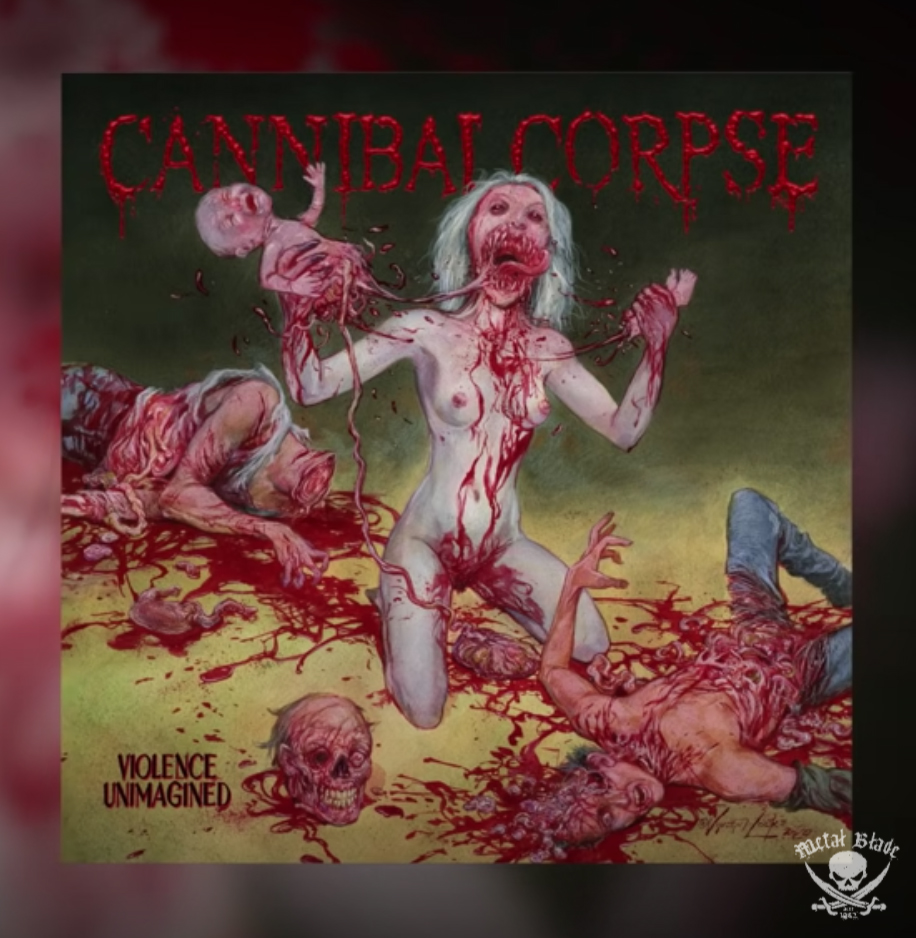
Versione non censurata della copertina di ‘Violence Unimagined’
Avete avuto problemi in passato in alcuni paesi anche solo per il contenuto dei vostri testi, con la Germania che vi ha vietato di eseguire certe canzoni in concerto e la Russia che vi ha vietato di esibirvi in generale. Questi divieti sono ancora in vigore?
“Quello in Russia presumo sia ancora in vigore, non credo che il clima politico sia cambiato al punto che potremmo tornare ed essere sicuri che nessuno degli spettacoli verrebbe cancellato. Per quanto riguarda la Germania, è stato inizialmente risolto, ma durante gli ultimi due anni in cui siamo stati in tour, 2018 e 2019, e abbiamo partecipato a un sacco di festival estivi, ogni volta che abbiamo suonato in Germania siamo stati messi in una posizione in cui, nuovamente, alcune canzoni non potevano eseguite. E non eravamo nemmeno preparati a fare altri brani, dato che Erik si era appena unito a noi, ci hanno fatto una specie di sorpresa all’ultimo minuto, così abbiamo finito col suonare alcuni pezzi senza la voce e i testi, solo per evitare di infrangere qualche legge tedesca. Quindi sì, questi problemi sono ancora in corso in certi territori.”
Hai nominato Blotted Science e Conquering Dystopia in apertura. Possiamo aspettarci in futuro qualcosa da questi due progetti?
“Per quanto riguarda Blotted Science, non siamo stati in grado di metterci insieme e far uscire qualcosa di nuovo, ma speriamo di riuscirci alla fine. Sono ancora in contatto con Ron (Jarzombek, ndr) regolarmente e ci piacerebbe fare qualcosa, ma siamo entrambi molto occupati. Lo stesso vale per Conquering Dystopia, mi piacerebbe tornare a far musica con Jeff (Loomis,ndr), Keith (Merrow, ndr) e Alex (Rüdinger, ndr), al momento non c’è nulla in ballo, ma sono aperto a fare di più con entrambi i progetti.”
Cosa diresti a una giovane band death metal appena agli inizi? E cosa diresti a te stesso se potessi tornare indietro di 30 anni?
“Penso che non vorrei dire a me stesso molto, le cose sono andate abbastanza bene, quindi qualsiasi errore io abbia fatto, lo lascerei al suo posto. Non vorrei cambiare qualcosa che mi farebbe finire in una posizione diversa da quello in cui mi trovo ora, e come band, ci troviamo in un posto abbastanza buono. Siamo stati molto fortunati. Per quanto riguarda le giovani band, direi che la cosa più importante è prima di tutto fare la musica che amate, non preoccupatevi di avere successo perché è impossibile da prevedere. Ci sono così tanti fattori diversi che devono coesistere per avere successo e molto dipende dall’essere nel posto giusto al momento giusto, quindi sicuramente conta un po’ anche la fortuna. Cercate di essere persone facili con cui lavorare e cercate di non avere un grande ego, perché se hai un buon atteggiamento la gente vuole che la tua band suoni con loro. D’altro canto, se una band ha una cattiva attitudine, la voce si sparge abbastanza velocemente.”
Il 2020 è stato ricco di grandi uscite death metal. Ti è capitato di ascoltare qualche band più giovane che ti è piaciuta molto? Cosa ne pensi dell’old school death metal revival che si sta diffondendo in tutto il mondo?
“Non ho ascoltato tanta roba recente, ma un album del 2020 che mi è piaciuto molto è l’ultima release dei Perdition Temple del mio amico Gene, ‘Sacraments of Descension’. Penso che sia grandioso che ci sia un grande interesse per il death metal della vecchia scuola. Se mi avessi detto, quando avevo 18/19 anni, che nell’anno 2021 ci sarebbero state un mucchio di band, composte da ragazzi relativamente giovani, che suonano death metal tradizionale e old school, non ci avrei mai creduto. Sono così felice di vedere quanto è stato forte e coerente il nostro genere. Non è che ci sia mai stato un periodo in cui il death metal è scomparso, c’è sempre stata una forte scena underground, sai, negli ultimi tre decenni. Certo, c’è stata la prima ondata di band death metal, la roba davvero old school, ma poi anche negli anni ’90 ci sono state band come Nile e Krisiun che sono diventate molto popolari, e poi i primi anni 2000 con Spawn Of Possession e Blood Red Throne. Non c’è mai stato davvero un punto in cui il death metal underground fosse debole, è sempre stato una forte forma di musica underground ed è una scena di cui si è orgogliosi di farne parte.”
L’Italia ha una grande scena metal. Conosci o ti piace qualche band di qui?
“Sì, certo. Siamo stati in tour in passato con alcune grandi band italiane. Hour Of Penance, Hideous Divinity… e anche Sadist. Questi sono i nomi che mi vengono in mente al momento, ma sono sicuro che ce ne siano molti altri validi.”
C’è qualche grande perdita nel mondo della musica che ti ha colpito particolarmente negli ultimi anni?
“Ce ne sono state molte e in alcuni casi è difficile parlarne. Abbiamo perso molti amici, come Sean Malone (Cynic, ndr), la cui recente scomparsa è stata un grande shock. Sono ancora abbastanza provato. E lo stesso vale per Sean Reinert (Cynic, Death, ndr), o per il mio amico Brian Pattison (Anthropic, ndr). È triste dire addio ai tuoi amici, sai, ma almeno possiamo ricordarli attraverso la musica che ci hanno lasciato.”
State pianificando qualche spettacolo in streaming più vicino alla data di uscita? Cosa ne pensi di eventi di questo tipo?
“Non abbiamo in programma alcuno spettacolo al momento, ma abbiamo parlato della possibilità di fare un live stream questo autunno, ma non ne siamo davvero sicuri. Preferiremmo davvero fare solo spettacoli dal vivo. Non so come ci si sentirebbe ad esibirsi per un concerto in live stream, come se fossimo di fronte a un pubblico quando il pubblico non è di fronte a noi. Siamo abituati ad avere interazione con i nostri fan, sarebbe strano sapere che ci stanno guardando dal loro salotto. Non l’abbiamo escluso, ma non abbiamo ancora nulla in programma, così come non abbiamo piani per spettacoli in generale. Speriamo almeno nel 2022 di riuscire a suonare in America. Sarebbe il primo posto ovviamente, perché siamo già qui. Non dobbiamo considerare i visti e altre cose del genere. Ho il sospetto che quando si ricomincerà a viaggiare, a livello internazionale, ci saranno più restrizioni, si potrebbe dover mostrare una prova di vaccinazione o qualcosa del genere…”
Sarà piuttosto difficile…
“Credo ci vorrà un bel po’ di tempo, ma vogliamo davvero tornare e suonare per tutti in Europa e nel mondo.”
Beh, Alex, il nostro tempo è finito, inutile dire che è stato un piacere enorme. C’è qualcos’altro che vorresti aggiungere per i lettori di Loud and Proud Italy?
“Prima di tutto, grazie per questa intervista e grazie a tutti i nostri fan. State al sicuro e in salute. Speriamo di vedervi al più presto quando tutto tornerà alla normalità. Take care!”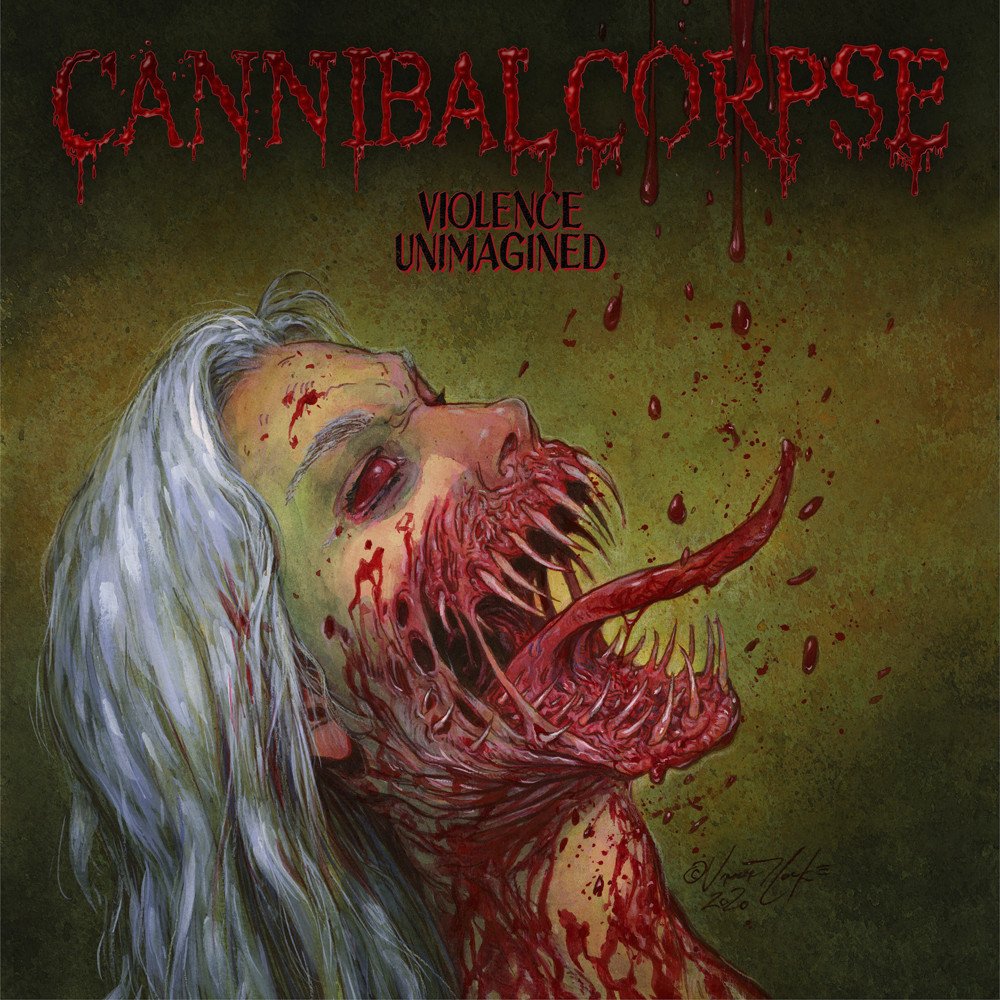
Discografia:
Eaten Back to Life (1990)
Butchered at Birth (1991)
Tomb of the Mutilated (1992)
The Bleeding (1994)
Vile (1996)
Gallery of Suicide (1998)
Bloodthirst (1999)
Gore Obsessed (2002)
The Wretched Spawn (2004)
Kill (2006)
Evisceration Plague (2009)
Torture (2012)
A Skeletal Domain (2014)
Red Before Black (2017)
Violence Unimagined (2021)
Line-up:
George “Corpsegrinder” Fisher – voce
Erik Rutan – chitarra
Rob Barrett – chitarra
Alex Webster – basso
Paul Mazurkiewicz – batteria
Per maggiori informazioni, qui il sito ufficiale della band.
English Version
Hi Alex. First of all thank you for finding the time for this interview. It’s a true privilege to have the chance to talk to you tonight. How are you and how are things where you are?
“Hi Terry! Things are good and I’m doing well. I’m here with my wife and our dog at our home in Oregon and like everybody else we’re just trying to stay safe and healthy, waiting to see what happens next, but we’re doing okay.”
‘Violence Unimagined’ is almost here and after listening to the promo I have to say it was worth the wait. The biggest change in Cannibal Corpse, since your previous ‘Red Before Black’, is obviously the addition of Erik Rutan to the line up. He has worked with you as a producer in the past and filled in on tour for Pat in the past year. And now it feels like he came into the band in the smoothest possible way. He managed to keep his strong identity and merging it with Cannibal Corpse’s one, even in the songs he wrote. How have dynamics changed with him in the band? Has the creative process behind ‘Violence Unimagined’ changed compared to the past?
“I think anytime you have a lineup change where somebody comes in and they’re writing a lot, of course there’s a change. With Erik though, he really understands our band very well, having worked with us on so many of our albums, as you said, as a producer and from having toured with us before he joined as a full time member. It wasn’t so different than it was before and it’s because of that, you know. He didn’t come in doing anything radically different, he’s just a very hard working guy and it is great to have him in the band. He worked so hard and got three songs together for us pretty quickly. He wrote ‘Condemnation Contagion’, ‘Overtorture’ and ‘Ritual Annihilation’..”
Some of the highlights of the record, in my opinion…
“Yeah, he did a great job really and, like I said, he understood what our music was about from having known us for so long and having worked with us so much in the past. He has his own style but he also knew how to fit in with us really well and how to combine those two things. I think you can hear on this album Erik’s routine, but it still sounds like a Cannibal Corpse album, so that’s an ideal situation. Anybody who was previously in the band or who’s in it now they’ve always had a chance to have their musical personality be part of the band, so when there’s a lineup change it’s impossible to not have a little bit of that change, but i think it’s a good thing.”
‘Violence Unimagined’, still extremely brutal, has slowed down slightly from ‘Red Before Black’, especially in some groovier episodes. Is this something to do with Erik’s style or is there another factor that brought you to this?
“You know it’s hard to say because the three of us who did the writing of the music this time, me, Erik and Rob, we were all writing separately from one another. Erik wrote his songs at home, same as me, and Rob wrote his songs mostly at home. Then we worked with Paul a little bit, with me and Erik programming drums and that sort of thing, and then present the band width demos. We didn’t really have a plan as to where the music was going to go, we knew we wanted it all to be super heavy and memorable, but we didn’t necessarily have a unified plan. After a few months into the writing process you start to hear completed songs and for us a key factor is variety and having slow stuff, like the episodes you’re talking about, helps to add that variety to an album. With death metal generally, fast is considered good every single time, and that’s great but if you’re on album number 15, like we are, and we had 14 albums where it was all fast. That’s like 160 songs, or whatever. I don’t even know how many songs we have written now, but we wouldn’t want them to all be the same tempo. We have a conscious goal to have a really good variety of songs on each album, but we didn’t necessarily think “Oh, let’s make this album a little slower than the last one.” That’s just how the songs turned out.”
You live on the other side of the country from the rest of the band and when the pandemic hit Cannibal Corpse were about to start recording. So, as you mentioned, you had to record your bass tracks in your home studio. Has that affected your playing and the final result?
“I’d say it was about the same actually, because I’m accustomed to recording at home. I’ve done full professional albums of bass recording at home with some side projects like Blotted Science and Conquering Dystopia. So I knew how to do it and I was prepared to play the songs and everything, but it’s definitely harder for me to record at home, it’s a lot easier when you have an engineer/producer sitting there and pushing the record button. And also, it would have been nice to have Erik there telling me “this is good enough, you don’t need to do this part 20 times”. When you’re recording on your own, you second guess yourself a lot more. It takes a lot longer, I spent more time recording these bass tracks than I would have on a normal record, where I’m recording with the engineer/producer sitting next to me. But it’s great because nowadays, the technology exists for you to record at home, especially for a bass player, it’s particularly simple to record a good direct signal at home and then send it to a studio. And the studio, in our case Erik, can re-amp it using his favourite gear.”
Any amp in particular?
“Erik’s favourite is an Ampeg Amp Head, that he has at the studios, and he re-amped my direct signal through that also using the Darkglass pedal, and it sounds the same as if I had been there really, I don’t think there’s much difference in the end, apart from the huge amount of time it took me!”
As you said, there’s some variety in this record. In a world of streaming, where anyone can skip from one track to another with a click, how important is it to listen to the new album in the order you presented it to us?
“We did think a lot about the sequence of songs and we would recommend people to listen to it in that order. There’s a pacing to it, we tried to create these ups and downs, like a roller coaster sort of thing. If you’re shuffling it, that’s fine, too but the best way to listen to it, in my opinion, would be the sequence that we thought about a lot. For example, ‘Murderous Rampage’ it seemed like the only song that could start the album. For each album, as we’re recording, we usually start to realise which one is going to be the first one before we’re finished recording. And we knew pretty quickly that, for example, ‘Segments Of The Flame’ should be the last one. It’s hard to explain why but it just sounds like it should be the last song and ‘Murder’ sounds like it should be the first, so I recommend listening to it in that sequence.”
You’re known for being a bass geek. You’re extremely technical and you also wrote a book years ago on techniques for metal players, but your 3 finger technique is admired and studied widely not only by metal players. What do you think of the transversality of music, and of something that’s been created for death metal being played by musicians of different genres?
“I’d love to hear people from different genres play our music, and I guess when it happens it would probably be some of the instrumentals we’ve done, because then you could hear, I mean you could have vocals too but it’s kind of hard to do death metal vocals in a different genre, maybe thrash metal or something but that’s such a related genre that’s almost on the same book. But yeah, hearing folk musicians play our instrumental ‘From Skin To Liquid’ or something like that would be really cool. It’s good music regardless. If it’s a good composition it should sound good on any instrument not just on distorted guitars and super loud electric instruments, it should sound good on piano too if it’s a good piece of music.”
15 records and 30+ years of activity for Cannibal Corpse. These are quite the numbers. When did you realise that you had made it?
“It’s something that happened very gradually, I can’t think of one particular moment. We never really made it in some huge immediate way, we gradually were able to start making a living and just enough to get by pretty early, but we were also living in a very modest way, splitting a house with friends, having lots of roommates and renting places that were very modest…”
We were lucky to see some of these places in ‘Centuries Of Torment‘…
“Yeah (laughs, ndr), you can’t deny we had very modest beginnings! And then gradually we got to the point where we could afford to buy a condo or some small place, and then eventually a house. But just being able to do it for a living, we’ve actually been able to do since the early 90s and it’s pretty amazing.”
Once again, for censorship reasons and in order for the record to be more widely released, you had Vincent Locke do a complimentary piece to the original cover. This is something that you had to do since ‘Tomb Of The Mutilated’, just to get it into more mainstream retail. Does it bother you that it still happens in 2021?
“It’s something we had to get used to deal with and I’m not that surprised. The gorier cover for this new album is very extreme and perhaps it’s not unreasonable to think that certain record stores, not that there’s many record stores out there these days, but of the ones that are left some might have a family clientele and not necessarily want that album cover right next to all the other bands that are in the C section, you know, like Candy and something like that… So it’s not unreasonable in certain circumstances for people to want to at least put a slipcover on it, but as we don’t like the slip cover option, it just makes more sense for the person to be able to have one kind of a cover or another, and they are both really good pieces of art by Vincent Locke. We’ve always preferred to do it that way rather than have slipcovers. We did a slip cover for ‘Torture’ and that worked out okay but it’s really better to have a second version of it, as we’ve been doing it since ‘Tomb of the Mutilated’ for a bunch of different albums.”
You had issues in the past in a few countries like Germany or Russia, just for the content of your lyrics, with Germany banning you from performing certain songs and Russia banning from performing in general. Are those bans still on?
“The one in Russia I would assume is still on, I don’t think that the political climate has changed to where we could return and be confident that none of the shows would be cancelled. With Germany, it was initially resolved but then during the last two years that we had been touring, 2018 and 2019, we did a lot of summer festivals and played in Germany quite a bit, and throughout 2019 we were actually put in a position where there were certain songs we couldn’t perform again. And we weren’t even prepared to do other songs as Erik had just joined us, they kind of sprung this on us at the last minute so we ended up playing some songs without singing in Germany, just to avoid breaking any laws or whatever. So yes, these problems are still ongoing in certain territories.”
You mentioned Blotted Science e Conquering Dystopia. Can we expect anything in the future from these side projects?
“In Blotted Science, we have not been able to get it together and get something new out, everybody’s been busy with other stuff, hopefully we will eventually. I’m still in touch with Ron regularly and we’d like to do something but we’re both pretty busy with other things. Same for Conquering Dystopia, I’d love to do more work with Jeff, Keith and Alex but so far nothing’s going on, but I’m definitely open to doing more with both of those projects.”
What would you say to a young death metal band just starting up? And what would you say to yourself if you could go back 30 years?
“I think I wouldn’t want to tell myself too much because things turned out pretty well, so whatever mistakes I made I would just leave them in place. I wouldn’t want to change something that would make me wind up in a different spot than I’m in right now, and we’re in a pretty good place. We’ve been very fortunate. As in for young bands now, I would say that the most important thing is to make music you love first, don’t even worry about being successful because it’s so impossible to predict. There’s so many different factors that have to come together to be successful and so much of it is dependent on being at the right place at the right time, so definitely a bit of luck. Also try make yourself easy to work with and don’t have a big ego, because if you have a good attitude people like to have your band play with them. If a band has a bad attitude, word gets around about that pretty fast. So have a good attitude, play music you love and hopefully luck is on your side and you can succeed some day.”
2020 was rich with great death metal releases. Did you happen to listen to any younger band you really liked? What do you think of the new revival of old school death metal that’s been spreading all over the world?
“I haven’t listened to a lot of newer stuff actually, but an album from 2020 that I’ve listened to a lot is the new release by my friend Gene’s Perdition Temple, ‘Sacraments of Descension’. I think it’s pretty cool that there’s a big interest in old school death metal, I think it’s great. If you told me when I was 18/19 years old that in the year 2021, there was going to be a bunch of bands, relatively young bands, that play old school and traditional death metal, I never would have believed it. I’m so happy for our genre to see how strong it’s been and how consistent it’s been. Because it’s not like there was a period of time when death metal went away, there’s always been consistently a strong underground death metal scene, you know, throughout the past three decades. Of course, there was the first wave of death metal bands, the really old school stuff, but then even through the 90s you had bands like Nile and Krisiun becoming popular, and then the early 2000s Spawn Of Possession or Blood Red Throne. There’s really never been a point where the death metal underground was weak, it’s always been a strong form of underground music and it’s a scene to be proud of being a part of.”
Italy, where I’m from, has a great metal scene. Do you know or like any bands from here?
“Yeah, of course. We toured in the past with some great Italian bands like Hour Of Penance and Hideous Divinity. And Sadist too! These are the ones that come to mind right now, but I’m sure there’s plenty more.”
Is there any big music loss that affected you in the most recent years?
“There’s been many, and for some it’s hard to talk about. We’ve lost a lot of friends. My friend Sean Malone’s passing recently was a big shock. I am still quite shocked by that. And same with Sean Reinert or my friend, Brian Pattson. It’s sad to say goodbye to your friends but at least we can remember their legacy, the music they left us.”
Are you planning any streaming shows closer to the release date? How do you feel about this type of event?
“We don’t have any shows planned at the moment, but we have talked about possibly doing a live stream this fall, but we’re not really sure. I mean, we really would rather just do live shows. I’m not sure how it would feel to be performing for a live stream concert, as though we were in front of an audience when the audience isn’t in front of us. They’re on screen somewhere else watching us in their living room, it would be a little strange. We’re used to having the audience interaction. We haven’t ruled it out, but we have no plans for that, as we don’t have plans for any shows. We’re hoping that maybe by 2022 we’ll be playing in America again. That would be the first place obviously, because we’re already here. We don’t have to consider visas and anything else like that. I would suspect that when travel starts again, internationally, there’s going to be more restrictions, you might have to show proof of vaccination, that sort of thing…”
It’s gonna be quite difficult…
“Yeah, it’s gonna be a while. We really want to come back and play for everybody in Europe and throughout the world, but it’s going to be a little while I think.”
Well, Alex, our time is up, needless to say it was a huge pleasure. Is there anything else you’d like to add for the readers of Loud and Proud Italy?
“First of all, thank you for having me for the interview. And I’d like to say thank you to all of our fans. Stay safe and healthy, and hopefully we see you all sooner than later when everything gets back to normal. Take care!”
Discography:
Eaten Back to Life (1990)
Butchered at Birth (1991)
Tomb of the Mutilated (1992)
The Bleeding (1994)
Vile (1996)
Gallery of Suicide (1998)
Bloodthirst (1999)
Gore Obsessed (2002)
The Wretched Spawn (2004)
Kill (2006)
Evisceration Plague (2009)
Torture (2012)
A Skeletal Domain (2014)
Red Before Black (2017)
Violence Unimagined (2021)
Line-up:
George “Corpsegrinder” Fisher – vocals
Erik Rutan – guitar
Rob Barrett – guitar
Alex Webster – bass
Paul Mazurkiewicz – drums
For more info, please visiti Cannibal Corpse official website.

Articoli Correlati
 Netgate ADV